

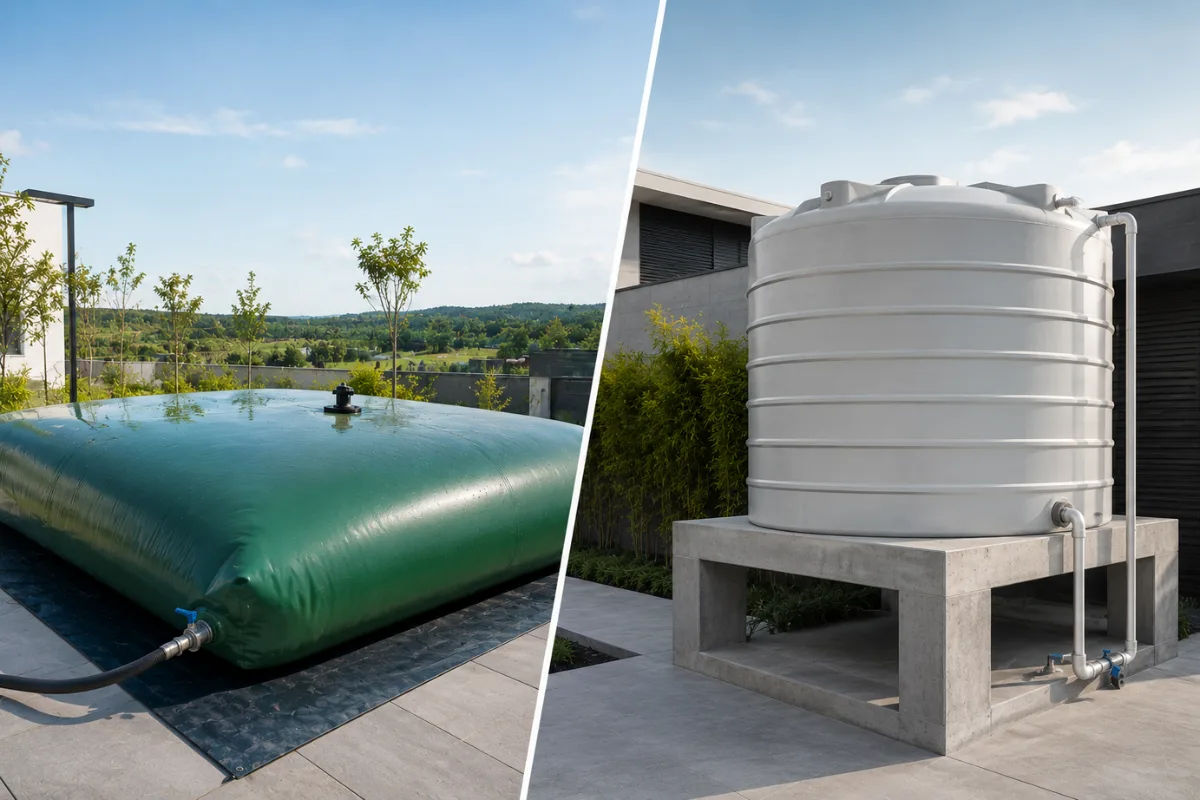
Water is one of the most valuable resources for agriculture, industries, construction sites, and commercial facilities. Choosing the right water storage system is important because it affects installation costs, maintenance, water availability, and long-term efficiency.
For many years, traditional water storage systems such as RCC water tanks, steel water tanks, HDPE tanks, and plastic water tanks have been the standard choice. While these systems are reliable for permanent installations, they often require significant construction work, longer installation time, and higher investment.
Today, flexible water tanks have become a practical alternative. They are easy to transport, quick to install, and require very little site preparation. Their portability and cost-effectiveness make them suitable for a wide range of applications, from farms and industrial facilities to emergency response projects.
In this guide, we’ll compare flexible water tanks vs traditional water storage systems, explain their advantages and limitations, and help you choose the right solution for your water storage needs.
What Are Flexible Water Tanks?
Flexible water tanks are modern water storage systems made from high-strength PVC-coated fabric. Unlike rigid tanks, they expand when filled with water and fold into a compact size when empty. This makes them easy to transport, store, and relocate whenever required.
They are also commonly known as:
- Flexible water storage tanks
- Portable water storage tanks
- Collapsible water tanks
- Foldable water tanks
- PVC water storage tanks
These tanks are designed for both temporary and long-term use. They provide a reliable water storage solution in locations where conventional tanks may not be practical.
Common Applications of Flexible Water Tanks
Because of their versatility, flexible tanks are used across many industries. Common applications include:
- Agricultural water storage
- Industrial water storage
- Rainwater harvesting
- Drinking water storage
- Irrigation systems
- Construction projects
- Fire protection
- Mining sites
- Fish farming and aquaculture
- Emergency water storage
Their ability to adapt to different environments makes them a practical choice for businesses and organizations with changing water storage requirements.
What Are Traditional Water Storage Systems?
Traditional water storage systems are rigid tanks made from materials such as reinforced concrete, steel, HDPE, or plastic. These tanks are generally installed as permanent structures and are widely used in residential, commercial, municipal, and industrial projects.
The most common types include:
| Water Storage System | Material | Common Applications |
|---|---|---|
| RCC Water Tanks | Reinforced concrete | Buildings and municipalities |
| Steel Water Tanks | Galvanized or stainless steel | Industrial facilities |
| HDPE Tanks | High-density polyethylene | Agriculture and residential use |
| Plastic Water Tanks | Polyethylene | Domestic and commercial applications |
Although these systems are durable, they usually require:
- Permanent foundations
- Civil construction work
- More installation time
- Higher labour costs
- Dedicated installation space
For projects that require mobility or temporary water storage, these requirements can become a limitation.
Flexible Water Tanks vs Traditional Water Storage Systems: A Quick Comparison
Choosing the right solution depends on your project requirements, budget, and long-term plans.
| Feature | Flexible Water Tanks | Traditional Water Storage Systems |
|---|---|---|
| Installation | Quick and simple | Requires civil construction |
| Portability | Easy to transport | Fixed after installation |
| Infrastructure | Minimal | Permanent foundation required |
| Maintenance | Low | Moderate to high |
| Expansion | Easy by adding tanks | Requires new construction |
| Space Requirement | Uses available space efficiently | Requires dedicated space |
| Initial Cost | Lower installation cost | Higher construction cost |
| Relocation | Simple | Difficult |
Both systems have their advantages, but the right choice depends on how and where the tank will be used.
Why Are Flexible Water Tanks Becoming More Popular?
Many industries are looking for water storage solutions that reduce costs without compromising performance. Flexible water tanks address several common challenges associated with traditional storage systems.
Some of the main reasons behind their growing popularity include:
- Faster installation
- Easy transportation
- Low maintenance
- Better space utilization
- Reliable bulk water storage
- Suitable for rainwater harvesting
- Convenient irrigation water storage
- Flexible storage capacity for expanding operations
These advantages make flexible tanks an excellent choice for agriculture, construction, industrial operations, and emergency response applications.
Benefits of Flexible Water Tanks Over Traditional Water Storage Systems
As water storage needs continue to grow across industries, agriculture, and infrastructure projects, businesses are looking for solutions that are practical, cost-effective, and easy to manage. This is where flexible water tanks offer a clear advantage over traditional water storage systems.
From faster installation to lower maintenance, flexible tanks are designed to solve many of the challenges associated with conventional storage methods.
Quick Installation
One of the biggest advantages of flexible water tanks is their simple installation process.
Traditional water storage systems often require excavation, concrete foundations, skilled labour, and several days or even weeks to complete. In contrast, flexible tanks only need a flat, prepared surface. Once positioned, they can be connected and filled within a short time.
This makes them ideal for:
- Construction sites
- Agricultural fields
- Remote villages
- Mining operations
- Temporary industrial facilities
- Emergency response projects
For businesses working on tight schedules, faster installation means less downtime and quicker operations.
Easy to Transport and Relocate
Unlike rigid tanks, flexible water tanks are lightweight and fold into a compact size when empty. This makes transportation much easier and significantly reduces logistics costs.
If your project moves from one location to another, the same tank can be relocated without major effort.
This portability is especially useful for:
- Seasonal farming
- Disaster relief operations
- Temporary construction projects
- Military camps
- Remote industrial sites
Traditional tanks are fixed after installation, making relocation difficult and expensive.
Better Use of Available Space
Not every site has enough space for a large concrete or steel tank.
Flexible water tanks can be installed on available open ground without requiring major structural work. Their flexible design also makes it easier to maximize storage capacity while using less installation space. If water demand increases in the future, additional tanks can be added without rebuilding the entire storage system.
Lower Installation and Maintenance Costs
When comparing water storage systems, the purchase price is only one part of the total investment. Installation, maintenance, transportation, and future expansion all affect the overall cost.
Flexible tanks help reduce these expenses because they:
- Require minimal site preparation
- Eliminate the need for civil construction
- Have lower transportation costs
- Require very little maintenance
- Can be relocated whenever needed
Over time, these advantages make flexible water tanks a more economical solution for many businesses and agricultural operations.
Excellent Durability in Outdoor Conditions
Modern flexible tanks are manufactured using high-quality PVC-coated technical fabrics designed for demanding outdoor environments.
These tanks provide excellent resistance against:
- UV exposure
- Heavy rainfall
- Moisture
- Temperature changes
- Abrasion
- Corrosion
Unlike steel tanks that may rust or concrete tanks that can develop cracks, flexible tanks require minimal maintenance while delivering reliable long-term performance.
Which Water Storage System Is Right for Your Needs?
Both flexible and traditional storage systems have their advantages. The best choice depends on how the tank will be used.
Choose Flexible Water Tanks if you need:
- Fast installation
- Easy transportation
- Low maintenance
- Temporary or mobile water storage
- Rainwater harvesting
- Agricultural irrigation
- Industrial expansion
- Emergency water storage
Choose Traditional Water Storage Systems if you need:
- Permanent infrastructure
- Fixed municipal installations
- Large residential buildings
- Long-term concrete storage systems
Understanding your project requirements before investing will help you select the most efficient and cost-effective solution.
Why Choose Centfab?
Choosing the right water storage system is important, but choosing the right manufacturer is just as important. A well-manufactured tank offers better durability, reliable performance, and a longer service life. At Centfab, we combine technical textile expertise with advanced manufacturing to deliver flexible water storage solutions that meet the needs of modern industries, agriculture, and infrastructure projects.
Why customers choose Centfab:
- Premium PVC-coated fabric for superior strength and durability.
- Advanced manufacturing processes that ensure consistent product quality.
- Strict quality control at every stage of production.
- Flexible water tanks available in various capacities and specifications.
- Solutions for agriculture, industrial water storage, rainwater harvesting, construction, aquaculture, and emergency applications.
- Easy-to-install products that reduce installation time and maintenance costs.
- Reliable supply with timely delivery across India and international markets.
- Experienced technical support to help customers choose the right storage solution.
Our focus is on providing durable, practical, and high-performance water storage solutions that deliver long-term value.
Conclusion
Both flexible water tanks and traditional water storage systems are effective solutions, but each serves different requirements.
Traditional tanks remain a good choice for permanent installations where fixed infrastructure is already available. However, they often involve higher construction costs, longer installation times, and limited flexibility. Flexible water tanks offer a smarter alternative for projects that require quick installation, easy transportation, low maintenance, and efficient water storage. Their versatility makes them suitable for agriculture, industrial operations, rainwater harvesting, construction sites, and emergency response applications.
If you’re looking for a reliable and cost-effective water storage solution, Centfab offers high-quality flexible water tanks manufactured from premium PVC-coated fabrics. With a commitment to quality, innovation, and customer satisfaction, we help businesses and organizations store water safely and efficiently for a wide range of applications.