

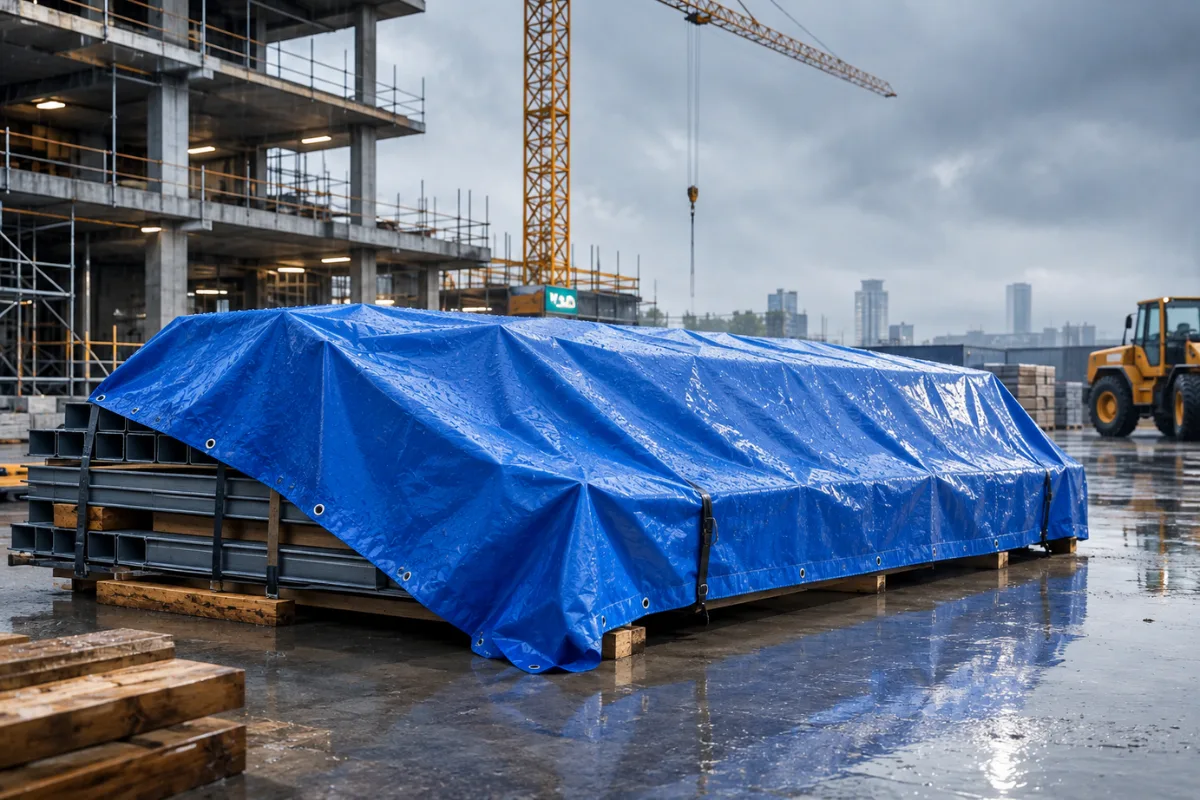
Walk any active construction site and you’ll spot tarpaulin doing half a dozen jobs at once covering cement bags before the rain hits, wrapping scaffolding, shielding stacked machinery overnight, protecting exposed building material from dust and moisture. It’s one of those materials nobody talks about until it fails, and then suddenly everyone’s talking about it.
Not every tarpaulin is built for that kind of daily wear, though. Construction sites are rough on materials with sharp edges, constant handling, sun, rain, and months of continuous use. Heavy duty tarpaulin exists specifically for this environment. Here’s what it actually does, where it’s used, and what to look for before you buy it in bulk.
What Is Heavy Duty Tarpaulin?
Heavy duty tarpaulin is a PVC coated fabric sheet built with a higher GSM (grams per square metre) and stronger base weave than standard tarpaulin, designed to handle repeated tension, rough handling, and long-term outdoor exposure.
A few things set it apart from lighter-duty covers:
- Thicker PVC coating for better waterproofing and abrasion resistance
- A denser polyester or nylon base weave for tear strength
- Reinforced edges and eyelets that can take repeated tying and pulling
- Better UV stabilization for months of continuous sun exposure
That combination is why it’s the go-to choice for construction, industrial storage, and outdoor sites where a standard tarp would wear out within a season.
Why Heavy Duty Tarpaulin Works for Construction Sites
Construction sites don’t offer gentle conditions. Materials get dragged over rough ground, exposed to weather for weeks, and handled by multiple crews. A few properties make heavy duty tarpaulin suited to that:
- Waterproofing keeps cement, wood, and other moisture-sensitive material dry through unexpected rain, without needing daily monitoring.
- Tear and puncture resistance Handles contact with rebar, sharp tools, and rough surfaces better than lighter fabric.
- UV resistance Sites often leave covers in place for weeks or months, so sun exposure needs to be factored into the fabric’s durability.
- Load-bearing strength at tie points Reinforced eyelets hold up under the tension of securing covers against wind, which matters on open sites.
Where Heavy Duty Tarpaulin Is Actually Used on Site
It shows up in more places than most people expect once you start looking:
- Covering building materials Cement, sand, bricks, and timber stacked outdoors need protection from rain and dust between deliveries and use.
- Machinery and equipment covers idle machinery left overnight or over weekends benefits from a cover that keeps moisture and dust off moving parts.
- Scaffolding wraps Tarpaulin wrapped around scaffolding protects both the structure and anything happening behind it from weather and debris.
- Temporary site enclosures Sections of a site under active work sometimes need a temporary barrier against rain, wind, or dust for nearby areas.
- Ground covers Protecting freshly poured concrete or laid material from rain before it sets.
Not every application needs the same fabric. A cover left in one place for months has different requirements than one moved and refolded daily, which is where the buying factors below actually matter.
What to Check Before Buying Heavy Duty Tarpaulin
A few things separate tarpaulin that lasts a full project from tarpaulin that needs replacing halfway through:
- GSM (fabric weight) Higher GSM generally means better durability, but also more weight to handle. Match it to how rough the actual use case is, not just “the heaviest available.”
- Coating type One side coated fabric works for lighter exposure; both side coated fabric suits covers exposed to moisture on both faces, like ground covers.
- Eyelet spacing and reinforcement Wider tarpaulins used across large stacks need eyelets spaced and reinforced properly, or the tie points fail first.
- UV formulation For covers left outdoors for extended periods, ask specifically about UV stability rather than assuming all tarpaulin performs the same.
- Seam strength Larger tarpaulin sheets are often seamed together; weak seams are usually the first failure point, not the fabric itself.
- Supplier consistency A heavy duty tarpaulin manufacturer with proper quality control matters more once you’re ordering at scale, where inconsistent batches become expensive.
Handling and Storage on Site
Even the toughest tarpaulin wears out faster with poor handling:
- Fold along different lines each time rather than the same crease, which stresses the coating at one point repeatedly.
- Store dry when not in use, damp storage invites mildew and weakens seams over time.
- Inspect eyelets and edges periodically, especially on tarps reused across multiple projects.
- Avoid dragging tarpaulin over sharp debris when it can be lifted and moved instead.
Common Mistakes When Buying Tarpaulin for Construction Sites
- Buying the cheapest sheet available. Low-GSM tarpaulin often needs replacing mid-project, which ends up costing more than one heavier sheet that lasts the full job.
- Ignoring eyelet quality. A tarpaulin can have strong fabric and still fail at the tie points if the eyelets aren’t reinforced properly.
- Assuming all PVC tarpaulin is UV rated the same way. UV stabilization varies by formulation worth confirming for long-exposure use.
- Not accounting for reuse. A tarpaulin bought for a single short job doesn’t need the same spec as one meant to be reused across several projects.
Where This Fits with Centennial Fabrics’ Product Range
Heavy duty tarpaulin sits alongside a wider set of coated fabric products built on the same core technology waterproofing, UV resistance, and durability under outdoor conditions. If your site work extends beyond covers, it’s worth looking at custom coated fabric solutions for application-specific requirements, or both side PVC coated fabric for covers that need protection on every surface.
Why Choose Centennial Fabrics
Centennial Fabrics has been manufacturing coated technical textiles for over two decades, with production supported by German coating technology that keeps coating thickness consistent across batches which matters directly for tarpaulin durability.
What that means for construction buyers:
- A manufacturing capability built for both standard and custom GSM, coating, and reinforcement requirements
- A quality control process on every batch, so large orders don’t come with inconsistent sheets mixed in
- A tarpaulin range that can be discussed against your actual site conditions rather than sold as one generic sheet
For sites ordering tarpaulin at scale, that conversation upfront about GSM, coating, and reinforcement tends to save more in replacement costs than it costs in time.
Final Takeaway
Heavy duty tarpaulin earns its place on construction sites by holding up to conditions lighter fabric simply isn’t built for sun, rain, rough handling, and months of continuous use. The right choice depends on matching GSM, coating type, and eyelet strength to how the tarpalin will actually be used and reused. Get that right, and it outlasts the project rather than needing replacement halfway through it.