

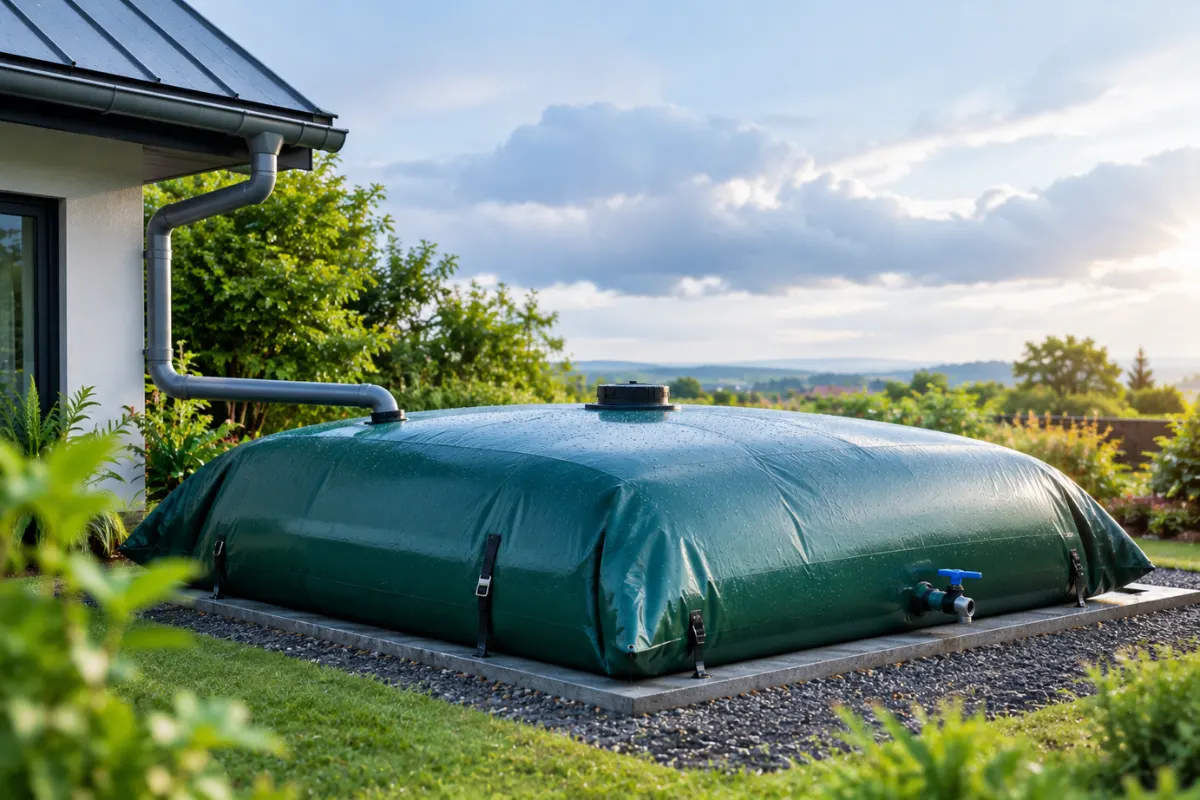
Rainwater harvesting only works if you have somewhere to store the water. Rigid tanks solve this, but they need a permanent structure, a fixed footprint, and often a bigger upfront investment. That’s not always practical, especially for farms, sites, or homes with limited space or changing storage needs. On top of that, rigid tanks can be difficult to relocate or scale once installed, which limits flexibility as needs shift from one season to the next.
Flexible water tanks offer a different approach. They store large volumes of water without needing permanent construction, and they can be set up faster than most rigid alternatives. This guide covers how they work, how to size one correctly, and how to install and maintain it properly.
What Is a Flexible Water Tank?
A flexible water tank is a PVC-coated fabric bladder designed to hold water without a rigid outer shell. Instead, the tank relies on the strength of the coated fabric itself, along with support from the ground or a simple frame.
Because of this design, flexible tanks offer a few practical advantages:
- They can be installed on relatively flat ground without major construction
- They fold down for storage or transport when not in use
- They come in a wide range of capacities to match different storage needs
- They cost less to install than most permanent tank structures
As a result, flexible tanks work well for rainwater harvesting in places where a fixed tank isn’t practical or necessary.
Why Flexible Water Tanks Work Well for Rainwater Harvesting
Rainwater harvesting depends on capturing water quickly and storing it reliably until it’s needed. Flexible tanks fit this need for a few reasons.
Fast setup. Since there’s no need for a permanent foundation, a flexible tank can often be set up within a day, which matters when harvesting needs to start before the rainy season.
Space efficiency. Because the tank sits flat on the ground, it doesn’t require the vertical clearance a rigid tank often needs.
Scalable capacity. Flexible tanks come in various sizes, so storage volume can be matched closely to actual rainfall and usage patterns.
Durability outdoors. A properly coated fabric resists UV exposure and water pressure over extended outdoor use, provided the material and coating are suited to the application.
How Much Capacity Do You Need?
Choosing the right tank size depends on a few practical factors, not just available budget.
- Average rainfall in your area. Higher rainfall regions can justify larger tanks, since more water is available to capture per season.
- Intended use. Irrigation, livestock, or household use each require different daily water volumes.
- Storage duration. A tank meant to bridge a short dry spell needs less capacity than one meant to last through an entire dry season.
- Available space. Flexible tanks still need a flat area sized appropriately for their volume, so larger capacities require more ground space.
- Backup water sources. If rainwater is only a supplement to another supply, a smaller tank may be sufficient. If it’s the primary source, sizing on the safe side avoids shortages during longer dry spells.
Because these factors vary from site to site, it’s usually worth calculating expected water needs before finalizing tank size, rather than estimating loosely.
How to Install a Flexible Water Tank
Correct installation affects both performance and lifespan. Here’s a straightforward process to follow:
- Choose a flat, debris-free site. Remove sharp stones, roots, and uneven patches before laying the tank, since these can cause punctures under water pressure.
- Prepare a stable base. A compacted, level surface reduces stress points once the tank is filled.
- Position the tank carefully. Unfold it fully and check that inlet and outlet fittings are correctly aligned before filling begins.
- Fill gradually. Adding water slowly allows the tank to settle evenly, rather than stressing one section under sudden pressure.
- Check connections. Confirm that all fittings and valves are secure and leak-free once the tank reaches a partial fill level.
- Inspect after the first full cycle. Once the tank has been filled and used at least once, check for any shifting, stretching, or wear at the seams.
Following these steps helps the tank perform as expected, instead of developing issues that could have been avoided during setup.
Where Flexible Water Tanks Are Used
Flexible tanks show up across several rainwater harvesting applications, including:
- Farm irrigation storage, holding rainwater for use during dry periods
- Residential rainwater harvesting, supplementing household water supply
- Construction sites, storing water for onsite use where permanent tanks aren’t practical
- Emergency and temporary water storage, set up quickly when needed
In each case, the appeal is the same: significant storage capacity without the cost and time of building a permanent tank.
Maintenance Tips for Flexible Water Tanks
A flexible tank lasts longer with a bit of routine care.
- Inspect the surface periodically for punctures, abrasion, or UV wear, especially after storms or high winds.
- Keep the surrounding ground clear of sharp debris that could shift underneath the tank over time.
- Drain and clean the tank occasionally to prevent sediment buildup at the base.
- Store the tank dry and folded properly if it needs to be moved or taken out of use for a season.
- Note down the fill and drain dates so you can track how well the tank matches your actual usage pattern over time.
Common Mistakes to Avoid
A few recurring issues shorten a flexible tank’s working life:
- Skipping ground preparation. Sharp debris left underneath is one of the most common causes of early punctures.
- Overfilling beyond rated capacity. This puts unnecessary stress on seams and fittings.
- Ignoring valve and fitting checks. Small leaks often start at connection points rather than the fabric itself.
- Choosing tank size based on budget alone. A tank that’s too small leads to water shortages exactly when it’s needed most.
Why Choose Centennial Fabrics
Centennial Fabrics has manufactured coated technical textiles for over two decades. Production runs on German coating technology, which keeps material thickness and quality consistent across every batch. For flexible water tanks, this consistency directly affects how well the tank holds up under sustained water pressure.
Here’s what that means for buyers:
- A manufacturing capability that supports different tank capacities and coating specifications
- A quality control process applied to every batch, so large or repeat orders remain consistent
- Coated fabric expertise that extends across related water storage applications, including pond liners and other custom coated fabric solutions
For farms and sites planning rainwater harvesting at scale, working with a manufacturer that understands both material performance and capacity planning helps avoid costly reinstallation later.
Final Takeaway
Flexible water tanks make rainwater harvesting practical without the cost and construction time of a permanent tank. Choosing the right capacity, preparing the site properly, and following a simple maintenance routine all contribute to a tank that performs reliably season after season. Get these basics right, and the tank becomes a dependable part of your water storage setup rather than a recurring maintenance concern.