
A fish tank that’s set up wrong causes problems long before anyone notices. Water seeps out slowly, oxygen levels drop, and fish stress builds up over weeks. By the time yields fall, the root cause is often traced back to the setup stage, not the daily operations. Fixing this after the fact usually costs far more than getting it right the first time.
Commercial aquaculture depends on getting the tank setup right from the start. This guide covers what makes a fish tank suitable for commercial use, how to size and install one, and how to keep operations running efficiently once it’s up.
What Makes a Fish Tank Suitable for Commercial Aquaculture
Not every tank built for water storage works well for fish farming. Commercial aquaculture tanks need a few specific qualities.
- Leak-proof construction. Even small seepage adds up over time, affecting water levels and increasing the workload for refilling.
- UV and weather resistance. Most commercial setups sit outdoors, so the tank material needs to handle continuous sun and temperature changes.
- Puncture resistance. Fish movement, cleaning tools, and general handling all put stress on the tank surface.
- Consistent surface quality. Uneven material can create weak points that fail under sustained water pressure.
Because of these requirements, coated fabric tanks have become a practical choice for commercial fish farming, since they combine flexibility with strong waterproofing.
Types of Commercial Fish Tanks
Fish farms typically choose between a few tank styles, depending on scale and site conditions.
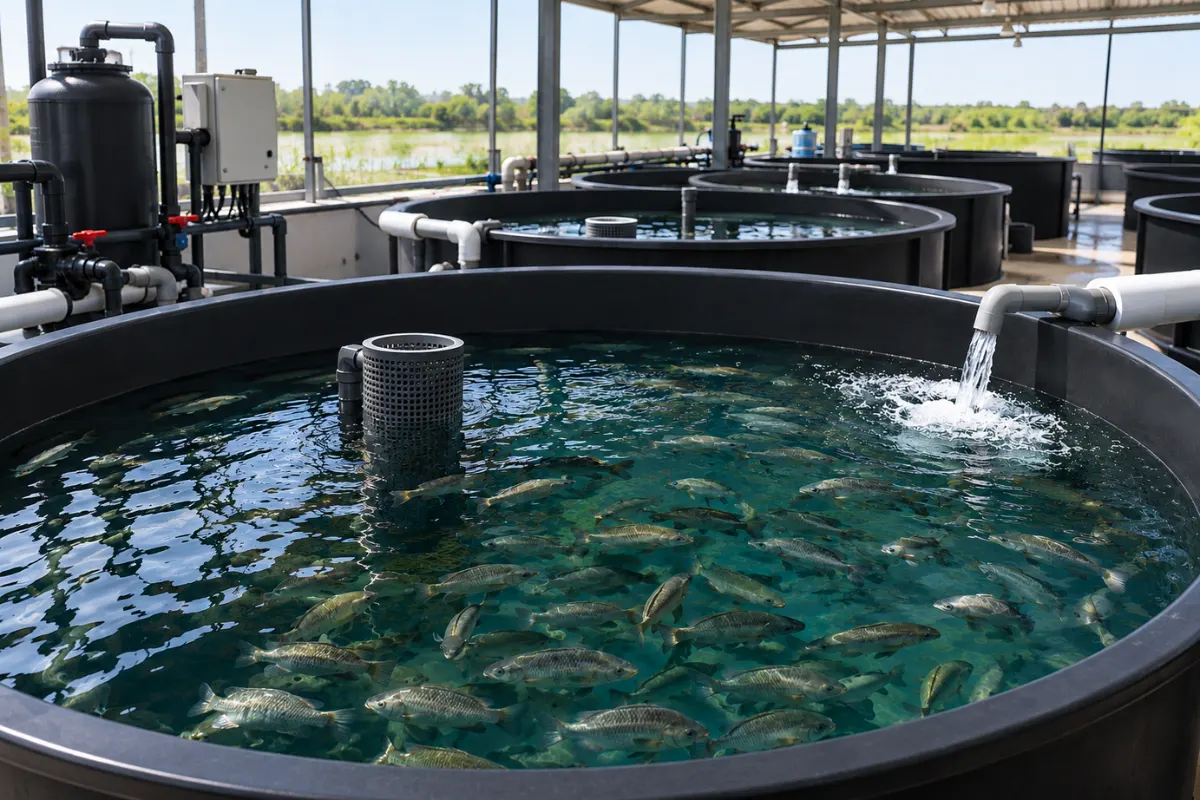
Flexible fish tanks. These are built from coated fabric and don’t need a rigid outer shell. As a result, they install faster and cost less than permanent structures, while still holding large water volumes.
PVC fish tanks. Built with PVC-coated fabric, these tanks resist water pressure and outdoor exposure well, making them suitable for extended commercial use.
Frame-supported tanks. For larger operations, a simple frame adds structural support around a flexible liner, which helps maintain shape at bigger capacities.
Modular tank systems. Some operations use several smaller tanks instead of one large one, which makes it easier to separate fish by size, species, or growth stage without building multiple permanent structures.
Choosing between these depends mainly on your available space, target capacity, and how permanent the setup needs to be.
How to Set Up a Commercial Fish Tank
Setting up a commercial fish tank correctly reduces problems later. Follow these steps for a reliable installation.
- Select a stable, level site. Choose ground that’s flat and free from sharp debris, since uneven surfaces stress the tank material once filled.
- Prepare the base. Compact the ground and clear away stones or roots. A smooth base prevents punctures and uneven settling.
- Position the tank or frame. Unfold the tank fully, or assemble the support frame first if you’re using one, before placing the liner.
- Install water inlet and outlet systems. Set up filtration, aeration, and drainage connections before filling, so the tank doesn’t need to be emptied again for adjustments.
- Fill gradually. Add water slowly to let the tank settle evenly under increasing pressure.
- Test water quality before introducing fish. Check oxygen levels, pH, and temperature to confirm the environment is ready.
- Monitor closely for the first few days. Early monitoring catches leaks, filtration issues, or uneven settling before they become bigger problems.
Following this sequence helps avoid the most common setup mistakes, which usually show up only after the tank is already in use.
Capacity and Sizing Considerations
Getting the tank size right affects both fish health and operational efficiency. A few factors guide this decision.
- Stocking density. Fish need adequate space and oxygen availability, so capacity should match the number and size of fish planned for the tank.
- Growth stage. Juvenile fish generally need less space than adults, so tank sizing may need to account for growth over the farming cycle.
- Water exchange rate. Larger tanks hold water longer between exchanges, which can reduce daily maintenance work if managed properly.
- Available space and budget. Bigger tanks increase both space requirements and setup cost, so capacity planning should balance operational goals against practical constraints.
Since these factors interact with each other, it often helps to plan capacity based on projected yield rather than available space alone.
Where Commercial Fish Tanks Are Used
Commercial fish tanks support several types of aquaculture operations, including:
- Fish farming businesses raising fish for commercial sale
- Hatcheries managing early-stage fish growth separately from mature stock
- Research and breeding facilities requiring controlled water environments
- Backup or supplementary tanks used alongside pond-based aquaculture systems
In each case, the setup priorities stay similar: reliable water retention, stable water quality, and enough capacity for efficient operation.
Maintenance Tips for Efficient Operation
Ongoing maintenance keeps a commercial tank performing well long after installation.
- Check the tank surface regularly for wear, punctures, or UV degradation, especially after storms.
- Clean filtration systems on a set schedule to prevent water quality issues from building up gradually.
- Monitor water levels daily, since a slow leak is easier to catch early than after significant loss has occurred.
- Keep records of water quality readings, so gradual changes are noticed before they affect fish health.
- Rotate cleaning and inspection duties across staff, so checks happen consistently rather than depending on one person’s schedule.
Common Mistakes to Avoid
A few recurring mistakes affect commercial fish tank operations.
- Skipping site preparation. Debris left under the tank often causes the first puncture within weeks.
- Overstocking beyond tank capacity. This stresses fish and reduces water quality faster than expected.
- Delaying water testing before introducing fish. Poor water conditions at the start can affect the entire farming cycle.
- Ignoring routine inspection. Small leaks or filtration issues become expensive problems if left unchecked.
Why Choose Centennial Fabrics
Centennial Fabrics has manufactured coated technical textiles for over two decades. Production runs on German coating technology, which keeps material thickness and quality consistent across every batch. For commercial fish tanks, this consistency directly affects how well the tank withstands sustained water pressure and outdoor exposure.
Here’s what that means for aquaculture buyers:
- A manufacturing capability that supports different tank sizes and coating specifications for varying operational needs
- A quality control process applied to every batch, so large or repeat orders remain consistent
- Coated fabric expertise that extends across related water storage applications, including pond liners and other custom coated fabric solutions
For aquaculture businesses scaling operations, working with a manufacturer that understands both material performance and capacity planning helps reduce the risk of costly downtime.
Final Takeaway
Setting up a commercial fish tank correctly affects everything that follows, from water quality to fish health to daily operational workload. Choosing the right tank type, sizing capacity to actual stocking needs, and following a proper installation sequence all contribute to a setup that runs efficiently. Get these fundamentals right, and the tank becomes a dependable part of the operation rather than a recurring source of problems