

Choosing biogas storage isn’t just a technical decision. It affects installation cost, how much space you need, how much maintenance the system demands, and how easily it can scale later. Get it wrong, and you either overspend on a system too rigid for your needs, or end up with storage that can’t keep up as gas production grows.
Flexible biogas tanks and fixed gas storage systems both solve the same core problem, storing biogas safely until it’s used. However, they go about it very differently, and each comes with its own trade-offs in cost, space, and upkeep. This guide compares the two directly, so you can decide which one actually fits your operation.
What Is a Flexible Biogas Tank?
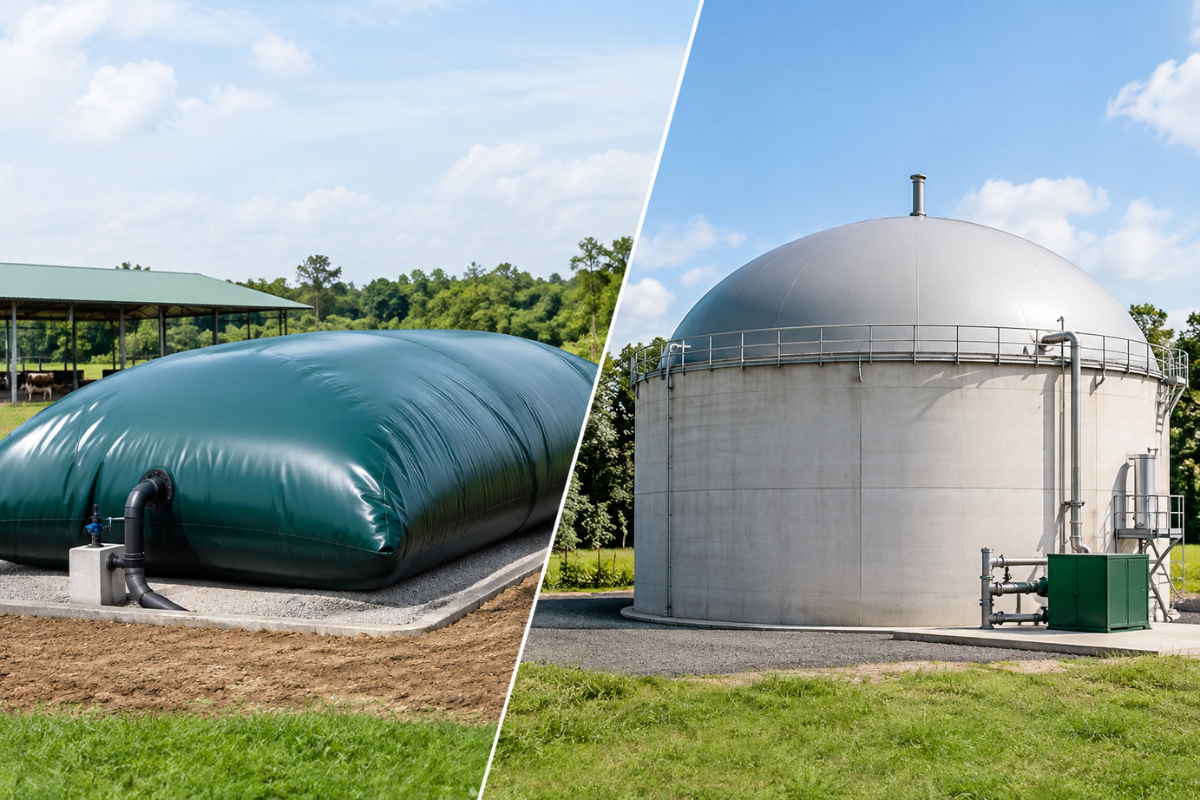
A flexible biogas tank is a PVC-coated fabric holder that expands and contracts as gas is produced and consumed. Unlike rigid structures, it doesn’t need a fixed internal volume, since the tank material flexes to accommodate changing gas levels.
Because of this design, flexible tanks offer a few practical advantages:
- Faster installation, since there’s no need for extensive civil construction
- Lower upfront cost compared to fixed dome structures
- Visual indication of gas levels, since the tank visibly inflates or deflates
- Easier relocation if the biogas setup needs to move later
As a result, flexible biogas tanks work well for smaller farms and operations that need storage without a large construction budget.
What Is Fixed Gas Storage?
Fixed gas storage, often built as a fixed dome biogas plant, uses a permanent underground or above-ground structure to hold gas at a set volume. Gas pressure builds within a fixed space, rather than expanding the container itself.
This approach comes with its own set of benefits:
- Long structural lifespan, often lasting decades with proper construction
- Lower risk of damage from surface impact or weather, since much of the structure is underground
- Stable gas pressure, since the system is designed around a fixed capacity
- Suitable for larger, permanent biogas installations
Fixed systems generally suit operations that already know their long-term capacity needs and have the budget for upfront construction.
Flexible Biogas Tanks vs Fixed Gas Storage: Key Differences
Here’s how the two options compare across the factors that matter most.
- Installation time. Flexible tanks can often be set up within days, while fixed dome systems typically require weeks of construction.
- Upfront cost. Flexible tanks generally cost less initially, since they avoid major civil work. Fixed systems require more investment before they’re operational.
- Maintenance. Flexible tanks need periodic inspection for punctures and UV wear. Fixed systems need less surface maintenance but are harder to repair if internal damage occurs.
- Scalability. Flexible tanks can be resized or supplemented relatively easily. Fixed systems are harder to expand once built, since capacity is tied to the original structure.
- Lifespan. Fixed systems generally last longer overall, provided they’re built correctly. Flexible tanks have a shorter lifespan but a much lower cost to replace or upgrade.
Installation Time and Cost
For many farms and small biogas operations, installation timeline and cost matter as much as long-term performance.
Flexible tanks typically involve laying the tank on a prepared surface, connecting it to the digester, and allowing gas collection to begin. This keeps costs and setup time low, which matters for operations wanting biogas capacity without a lengthy project timeline.
Fixed systems, on the other hand, involve excavation, masonry or concrete work, and a longer commissioning process. While this adds upfront cost and time, it often results in a system that requires less structural attention over its lifespan.
Maintenance Requirements
Ongoing maintenance differs significantly between the two systems.
Flexible biogas tanks need:
- Regular surface checks for punctures or wear
- UV exposure monitoring, since prolonged sun exposure affects material lifespan
- Periodic checks on connection points and valves
Fixed gas storage systems need:
- Less frequent surface inspection, since the structure is largely enclosed
- Occasional checks on pressure regulation and internal seals
- More involved repairs if structural issues do occur, since access is limited
Because flexible tanks are easier to inspect and repair, many smaller operations prefer them despite the shorter expected lifespan.
Capacity and Scalability
Growing biogas needs affect this decision more than people often expect.
- Flexible tanks can be added alongside existing ones as production increases, offering a straightforward way to scale gradually.
- Fixed systems require careful capacity planning upfront, since expanding a completed structure is difficult and costly.
- For operations with predictable, stable gas production, fixed storage capacity planning is more straightforward.
- For operations expecting growth or seasonal variation, flexible tanks offer more practical flexibility.
Which One Should You Choose?
The right choice depends on a few key factors specific to your operation.
- Budget available now versus long-term. Choose flexible tanks if upfront cost matters most. Choose fixed storage if you can invest more initially for a longer-lasting system.
- Expected growth. If gas production is likely to increase, flexible tanks make scaling easier.
- Site permanence. If the biogas system might need to relocate, flexible tanks offer far more mobility.
- Maintenance capacity. If your team can handle regular inspections, flexible tanks work well. If you’d prefer less frequent maintenance, fixed storage may suit better.
Common Mistakes When Choosing Biogas Storage
A few recurring mistakes affect this decision.
- Choosing based on cost alone. A cheaper flexible tank might not suit an operation planning significant long-term expansion.
- Underestimating maintenance needs. Flexible tanks require more routine attention than some buyers expect.
- Ignoring future capacity needs. Fixed systems are difficult to expand later, so undersizing at the planning stage causes problems down the line.
- Skipping quality checks on tank material. Not all flexible biogas tanks use the same coating quality, which directly affects durability and gas retention.
Why Choose Centennial Fabrics
Centennial Fabrics has manufactured coated technical textiles for over two decades. Production runs on German coating technology, which keeps material thickness and quality consistent across every batch. For biogas tanks specifically, this consistency matters, since uneven coating can lead to gas leakage or premature wear.
Here’s what that means for buyers:
- A manufacturing capability that supports different biogas tank sizes and coating specifications
- A quality control process applied to every batch, so tank material performs consistently over time
- Coated fabric expertise that extends across related outdoor storage applications, including custom coated fabric solutions built for specific requirements
For farms and facilities weighing flexible versus fixed biogas storage, working with a manufacturer that understands material performance helps in choosing a tank built for the actual operating conditions involved.
Final Takeaway
Flexible biogas tanks and fixed gas storage both work, but they suit different situations. Flexible tanks offer faster setup, lower upfront cost, and easier scaling, while fixed systems offer longer lifespan and lower routine maintenance once built. The right choice comes down to your budget, expected growth, and how much ongoing maintenance your team can realistically handle.