

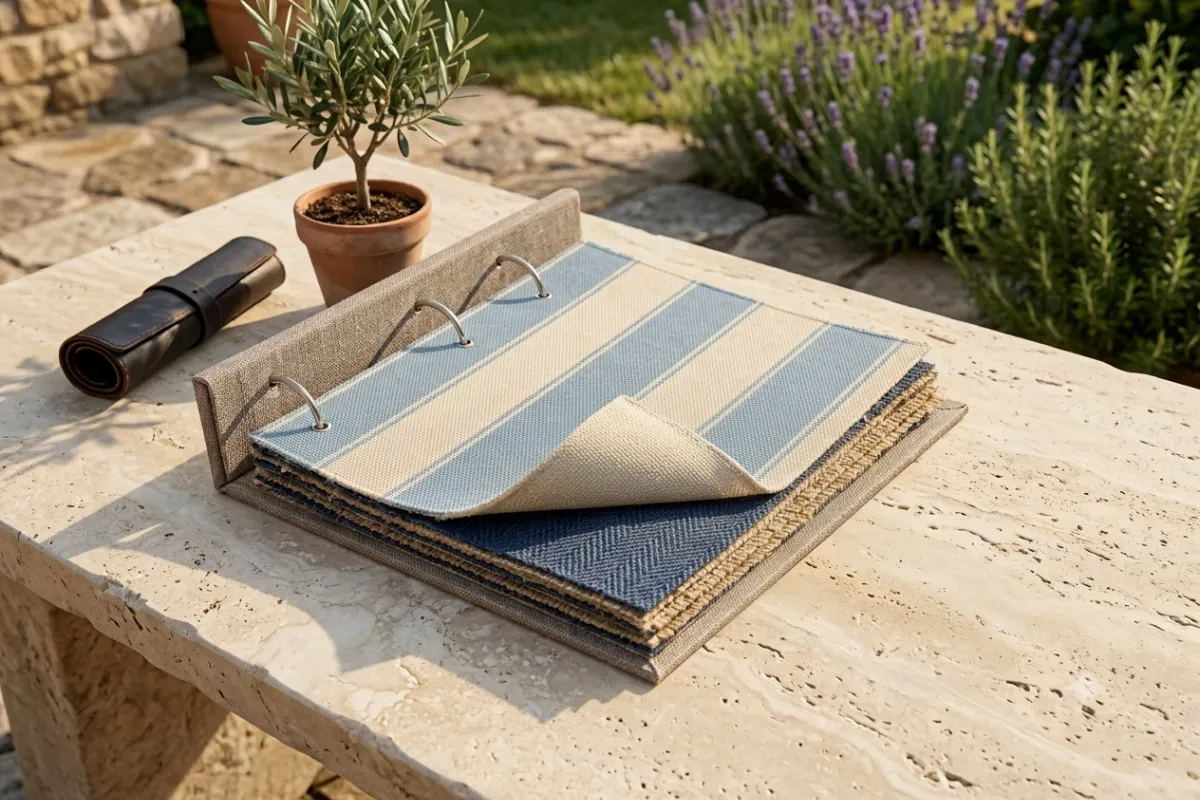
A retractable awning gets folded and unfolded more than almost any other outdoor fabric structure. Every extension and retraction puts stress on the material, and over a season of daily use, a fabric that isn’t built for it starts to sag, fade, or crack at the fold lines. That’s before rain, sun, and wind exposure even come into the picture. For homeowners and businesses relying on awnings for daily shade, that kind of failure means an early replacement and an unplanned expense.
PVC awning fabric has become the standard choice for retractable awnings because it holds up to this kind of repeated movement while still resisting water and UV damage. This guide covers what makes it suitable, how to choose the right fabric, and how to keep it performing well over time.
What Is PVC Awning Fabric?
PVC awning fabric is a coated textile, typically polyester coated with PVC, built to handle outdoor exposure and constant folding. The coating provides waterproofing and UV protection, while the base fabric gives it the strength to flex daily without weakening.
A few properties make it suitable for retractable systems specifically:
- Flexibility that allows repeated folding without cracking
- Waterproofing that keeps rain from soaking through the canopy
- UV stability that resists fading and material breakdown over time
- Resistance to mildew, which matters since awnings often stay folded when wet
Because of this combination, PVC awning fabric performs differently from fixed-structure coated fabrics, since it needs to survive constant mechanical movement in addition to weather exposure. A fabric that works well for a static tarpaulin cover might not hold up nearly as long once it’s folded and unfolded every single day.
Why PVC Awning Fabric Works for Retractable Awnings
Retractable awnings face a unique set of demands compared to fixed canopies or tarpaulins. A few properties matter most here.
Fold resistance. Since the fabric folds and unfolds daily, the coating needs to stay flexible without cracking at the crease lines. A lower-quality coating tends to weaken exactly where it folds most often.
Water resistance. Awnings are frequently extended during light rain, so the fabric needs to shed water rather than absorb it, which also prevents mildew from developing in the folds.
UV and fade resistance. Awnings spend long hours in direct sunlight, so color retention and material strength both depend on the fabric’s UV stabilization.
Lightweight strength. The fabric needs to be strong enough to resist wind and tension, yet light enough for the retraction mechanism to handle smoothly.
How to Select the Right Awning Fabric
Not every PVC awning fabric performs the same way, so a few factors are worth checking before you choose one.
Coating type. One side PVC coated fabric suits lighter-duty awnings, while both side PVC coated fabric offers more complete protection for larger or heavy-use installations.
Fabric weight (GSM). Heavier fabric holds up better under wind and repeated use, but it also adds weight to the retraction mechanism, so it needs to match what your awning system is built to handle.
UV stabilization. Since awnings sit in direct sun for extended periods, confirm the fabric’s UV rating rather than assuming all PVC coatings perform equally.
Fold quality of the coating. Ask about the coating’s flexibility rating, since this directly affects how well the fabric holds up to daily folding without cracking.
Color and finish stability. Darker colors and matte finishes can behave differently under prolonged UV exposure, so it helps to confirm expected fade resistance for your chosen finish.
Where PVC Awning Fabric Is Used
PVC awning fabric shows up across several types of installations, not just home patios.
- Residential retractable awnings, providing shade over patios and decks
- Commercial storefront awnings, protecting entrances and outdoor seating areas
- Café and restaurant canopies, which retract based on weather and time of day
- Depot and warehouse shelters, where awning fabrics provide quick, temporary shade or weather cover
- Vehicle and equipment shading, where a retractable cover offers protection without a permanent structure
In each case, the fabric needs to balance flexibility for daily movement with durability for long-term outdoor exposure. The specific demands change slightly by setting, but the underlying material requirements stay largely the same.
Maintenance Tips for PVC Awning Fabric
A little routine care extends the working life of the fabric significantly.
- Retract the awning fully dry whenever possible, since folding it wet encourages mildew growth in the creases.
- Clean the surface periodically with mild soap and water, avoiding harsh chemicals that can strip the coating.
- Check fold lines and seams for early signs of cracking or wear, especially after a full season of daily use.
- Avoid retracting the awning during high winds, since sudden folding under tension can stress the fabric unevenly.
- Give the canopy a full inspection before the season’s heaviest use, checking for weak spots that built up during storage.
Common Mistakes to Avoid
A few recurring mistakes shorten the lifespan of PVC awning fabric.
- Choosing fabric weight without checking the retraction mechanism. Fabric that’s too heavy can strain the awning’s motor or folding arms over time.
- Ignoring UV rating. Not all PVC coatings resist fading equally, and a mismatch here shows up as discoloration within a season or two.
- Folding the awning while wet. This is one of the most common causes of mildew and odor buildup in retractable systems.
- Skipping regular inspection. Small cracks at fold lines grow quickly under continued daily movement.
Why Choose Centennial Fabrics
Centennial Fabrics has manufactured coated technical textiles for over two decades. Production runs on German coating technology, which keeps coating thickness and flexibility consistent across every batch. For awning fabric specifically, this consistency matters, since uneven coating tends to fail first at fold lines.
Here’s what that means for buyers:
- A manufacturing capability that supports different GSM, coating, and finish requirements for awning applications
- A quality control process applied to every batch, so fabric performs consistently across large or repeat orders
- Coated fabric expertise that extends across related outdoor applications, including custom coated fabric solutions built for specific project needs
For businesses ordering awning fabric at scale, working with a manufacturer that understands both fold performance and UV stability helps avoid early replacements across an entire installation.
Final Takeaway
PVC awning fabric earns its place on retractable systems by combining flexibility, waterproofing, and UV resistance in a material built to fold daily without breaking down. The right choice depends on matching coating type, fabric weight, and UV stability to how the awning will actually be used. Get that right, along with proper drying and storage habits, and the fabric holds up season after season instead of fading or cracking within a year.