

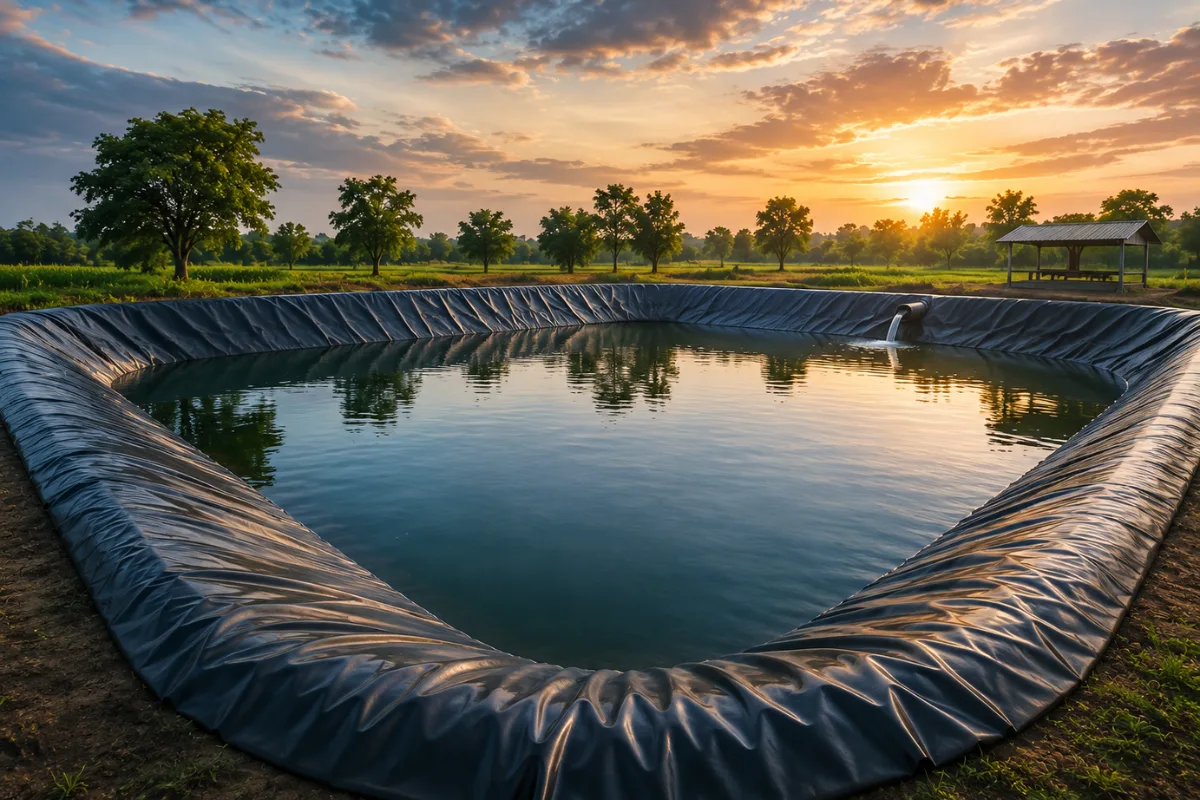
Water is an essential resource for agriculture and aquaculture. Keeping stored water from escaping into the soil is therefore important. A reliable PVC Pond Liner creates a waterproof barrier between the pond and the ground. This helps reduce seepage and improves water retention.
PVC liners are flexible, durable, and suitable for different pond designs. They can be used for fish farming, aquaculture, agricultural water storage, and other water containment applications. Choosing the right PVC Pond Liner Material can improve pond performance and reduce maintenance requirements over time.
What Is a PVC Pond Liner?
A PVC Pond Liner is a flexible waterproof membrane used to cover the base and sides of a pond. It prevents stored water from penetrating into the surrounding soil.
PVC, or polyvinyl chloride, can be engineered to provide flexibility, strength, and resistance to outdoor conditions. These properties make it suitable for water containment systems where the liner needs to follow the shape of the pond.
A PVC Pond Liner Sheet can be used for:
- Fish farming ponds
- Aquaculture ponds
- Agricultural water storage
- Irrigation reservoirs
- Rainwater collection systems
- Farm ponds
- Decorative and landscape ponds
- Other water containment applications
The liner creates a controlled water-holding surface. This is especially useful in areas where the natural soil does not retain enough water.
Why PVC Pond Liners Support Water Conservation
Water loss through soil seepage can reduce pond efficiency. This can be a major concern in areas with limited water availability or where ponds need frequent refilling. A properly installed Waterproof Pond Liner creates a barrier that limits water movement into the surrounding soil. This allows more stored water to remain available for its intended use.
PVC lining can support water conservation by:
- Reducing seepage into the ground
- Improving water retention
- Reducing unnecessary water replacement
- Supporting efficient pond management
- Helping maintain more consistent water levels
- Making better use of available water resources
For agricultural and aquaculture projects, better water retention can make day-to-day water management more efficient.
Key Properties of PVC Pond Liner Material
The performance of a pond liner depends largely on its material quality. A good PVC Pond Liner Material should provide a balance of flexibility, strength, waterproofing, and resistance to outdoor conditions.
Flexibility
PVC is suitable for applications that require a flexible lining system. It can adapt to curved surfaces and different pond profiles when installed correctly. This flexibility is useful for ponds with irregular shapes, varying depths, or different surface contours.
Waterproof Performance
The primary purpose of a pond liner is to retain water. A high-quality PVC liner provides a continuous waterproof layer that helps minimize seepage. This makes PVC suitable for ponds where maintaining stable water levels is important.
Tear and Puncture Resistance
Pond liners can experience stress from soil movement, installation work, and other physical factors. The material should therefore have sufficient mechanical strength for the intended application. A properly manufactured PVC Liner Sheet can provide the required strength when the correct specification is selected.
Weather Resistance
Outdoor ponds are exposed to sunlight, rain, temperature changes, and other environmental conditions. A suitable PVC Pond Liner should be manufactured for the conditions expected at the installation site. Good material quality can help maintain consistent performance throughout its service life.
PVC Pond Liners for Aquaculture
Aquaculture requires careful management of water quality and pond conditions. The pond environment can directly affect fish and other aquatic organisms. Reliable water containment is therefore an important part of aquaculture infrastructure. A Fish Pond Liner made from suitable PVC material creates a controlled barrier between the water and the surrounding soil.
This can help reduce direct contact between stored water and potentially unsuitable ground conditions.
PVC liners are suitable for applications such as:
- Fish farming ponds
- Breeding ponds
- Nursery ponds
- Aquaculture tanks and ponds
- Hatchery systems
- Commercial aquatic farming
Why PVC Is Suitable for Different Pond Designs
Every pond project has different dimensions, depths, and ground conditions. Flexibility is therefore an important factor when choosing a lining solution. PVC can be manufactured and supplied in flexible sheet formats that accommodate different pond configurations. When properly installed, the material can follow the contours of the pond without requiring a rigid structure. This makes PVC Pond Liner Sheets suitable for smaller agricultural ponds as well as larger commercial water containment projects, depending on the required specifications.
How PVC Pond Liners Improve Water Retention
A pond can lose a significant amount of water when the surrounding soil allows seepage. This can increase water consumption and make pond management more difficult.
A PVC Pond Liner helps address this problem by creating a waterproof layer between the stored water and the ground.
The barrier helps keep water inside the pond and reduces unnecessary seepage. As a result, farmers, aquaculture operators, and water storage facilities can make better use of available water.
PVC lining can be particularly useful when:
- Water availability is limited
- The soil has high permeability
- Regular water replacement increases operating costs
- Consistent water levels are important
- The pond is used for commercial aquaculture
Benefits of PVC Pond Liners for Aquaculture
Aquaculture operations require controlled water conditions. Fish and other aquatic species need a suitable environment for growth. The pond structure and lining system therefore play an important role in overall farm management.
A suitable Aquaculture Pond Liner provides a smooth and controlled surface while separating the water from the underlying soil.
Key benefits include:
- Improved water containment
- Reduced seepage
- Easier pond maintenance
- Better control over the pond environment
- Reduced interaction between water and surrounding soil
- Suitability for different aquaculture applications
A well-maintained lining system can support efficient fish farming while helping operators manage their water resources more effectively.
Applications of PVC Pond Liner Sheets
PVC liners are suitable for more than conventional fish ponds. Their flexibility and waterproof performance allow them to be used in several water containment applications.
Fish Farming
PVC liners can be used in commercial fish farming ponds where dependable water containment is required.
Aquaculture Facilities
Aquaculture farms can use PVC lining to create controlled pond environments for different stages of aquatic production.
Agricultural Water Storage
Farmers can use a Water Storage Pond Liner to reduce seepage from irrigation and water storage ponds.
Rainwater Harvesting
PVC lining can help retain collected rainwater and reduce losses caused by soil infiltration.
Farm and Irrigation Ponds
Lined ponds can provide an efficient way to store water for agricultural activities. They are particularly useful where natural soil conditions are not suitable for long-term water retention.
Factors That Influence PVC Pond Liner Performance
The performance of a pond liner depends on more than the material itself. Proper planning, product specifications, installation, and site conditions all affect the final result.
Before installation, project owners should consider:
- Pond dimensions and depth
- Soil and ground conditions
- Expected water pressure
- Environmental exposure
- Required liner thickness
- Installation method
- Welding and joint quality
- Expected operating conditions
Choosing the right PVC Liner Sheet specification helps ensure that the material is suitable for the intended application.
Common Mistakes to Avoid
Several avoidable issues can affect the performance of a pond lining system.
Ignoring the Ground Surface
Sharp stones, roots, debris, and uneven surfaces can place unnecessary stress on the liner.
The installation surface should therefore be prepared properly before the liner is placed.
Choosing the Wrong Specification
The liner should match the project’s operating conditions. Selecting a material without considering pond size, environmental exposure, and expected loads can affect long-term performance.
Poor Seam Installation
Seams are critical to maintaining waterproofing. Poorly joined sections can create weak points and increase the risk of leakage.
Neglecting Installation Quality
Proper handling and installation can help prevent unnecessary tears, punctures, and folds.
Why Choose PVC for Water Conservation and Aquaculture?
PVC provides a practical combination of flexibility, waterproofing, durability, and adaptability. These properties make it suitable for projects where reliable water containment is important. For water conservation, PVC lining helps minimize seepage and retain stored water.
For aquaculture, it provides a controlled lining surface that can support easier pond management.
The value of a PVC lining system comes from its ability to combine water retention with practical installation and long-term usability.
Why Choose Centennial Fabrics Limited?
At Centennial Fabrics Limited, we focus on developing technical textile and flexible material solutions for demanding applications.
Our product portfolio includes:
Our approach focuses on:
- Consistent product quality
- Controlled manufacturing processes
- Product performance and durability
- Quality testing
- Application-focused solutions
- Reliable technical support
For pond lining applications, consistent material quality is important because the liner remains exposed to water and environmental conditions for extended periods.
Conclusion
A reliable pond lining system can play an important role in water conservation and aquaculture.
By creating a waterproof barrier, a PVC Pond Liner helps reduce seepage and supports better water retention. Its flexibility and waterproof performance make it suitable for different pond configurations and applications.
PVC liners can be used for:
- Fish farming
- Aquaculture
- Agricultural water storage
- Rainwater harvesting
- Irrigation ponds
- Other water containment applications
For long-term performance, the liner should be matched to the project requirements and installed correctly. Material quality, liner specification, UV exposure, site conditions, installation quality, seam integrity, and maintenance can all affect service life. Selecting the right PVC Pond Liner Material and following proper installation practices can help provide reliable performance and support more efficient long-term water management.