
Stored agricultural produce can face insect attacks and other storage pests. These pests can lower product quality and cause financial losses. Therefore, proper pest management is important during storage, handling, and transportation.
Controlled fumigation is one method used to manage certain pests in stored commodities. Fumigation Covers help create an enclosed space during this process. They help retain the fumigant around the treated commodity for the required exposure period.
For grain storage and export, choosing the right cover requires more than selecting a normal tarpaulin. The material, seams, size, strength, and sealing performance all matter.
The cover must also suit the fumigant and the treatment method. Most importantly, trained personnel should carry out the complete fumigation process according to applicable safety requirements.
What Are Fumigation Covers?
Fumigation Covers are specialized sheets used during controlled fumigation. They help enclose agricultural commodities, grain stacks, or suitable storage areas.
The cover creates a controlled space around the commodity. Proper sealing then helps reduce fumigant leakage during treatment.
A good fumigation cover should provide:
- Suitable gas retention
- Strong construction
- Reliable seams
- Good tear resistance
- Suitable dimensions
- Easy handling
- Compatibility with the intended fumigant
A normal tarpaulin may protect grain from rain, dust, and sunlight. However, that does not automatically make it suitable for fumigation.
How Do Fumigation Covers Work?
The basic principle is simple: enclose the commodity and control the treatment environment.
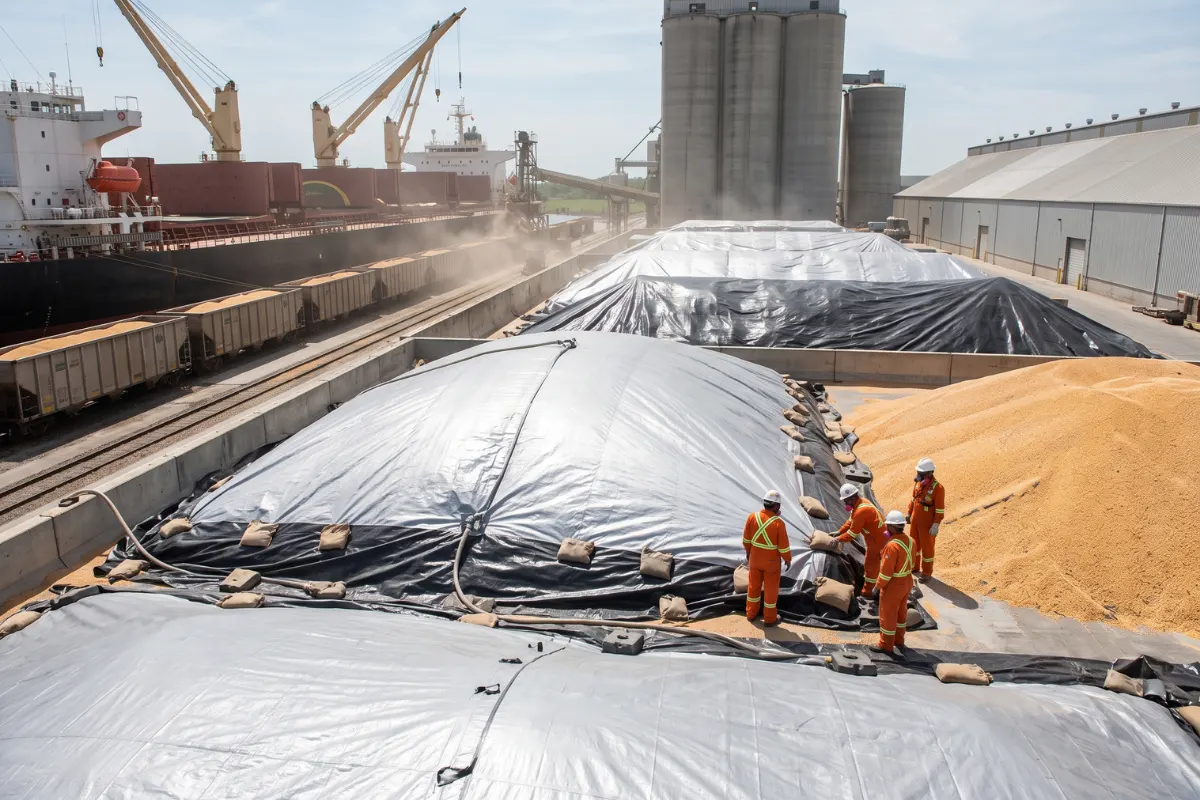
During an approved fumigation procedure, workers place a suitable cover over the commodity. They then seal the edges and joining areas.
This enclosure helps keep the fumigant around the treated commodity for the required exposure period.
Several factors can affect the performance of the enclosure, including:
- Cover material
- Cover condition
- Seam quality
- Edge sealing
- Surface condition
- Stack size
- Stack arrangement
- Environmental conditions
- Fumigation procedure
Even a small hole or poor seal can affect the enclosure. Therefore, operators should inspect the cover before every use.
Why Are Fumigation Covers Important for Agricultural Produce?
Help Maintain a Controlled Enclosure
The main purpose of a Fumigation Cover for Storage is to create a suitable enclosure around the treated commodity.
A damaged cover or poor seal can allow fumigant to escape. As a result, the treatment may not work as intended.
It can also create serious safety risks. For this reason, operators must inspect and seal the cover properly before starting treatment.
Support Stored-Product Pest Management
Stored grains can attract insects and other pests. These pests may reduce quality and affect the value of the commodity.
Fumigation can help control certain pests under controlled conditions.
However, the cover itself does not kill the insects. Instead, it supports the fumigation process by helping retain the fumigant around the commodity.
Allow Treatment at the Storage Location
Sheet-based fumigation can allow operators to treat suitable commodities where they are already stored.
This can reduce the need to move the commodity to another location.
Depending on the approved treatment method, applications may include:
- Grain stacks
- Bagged commodities
- Warehouses
- Storage facilities
- Bulk agricultural produce
- Certain transport-related applications
Important Features of Agricultural Fumigation Covers
Not every cover offers the same performance. Therefore, buyers should check the following features before selecting Agricultural Fumigation Covers.
Gas-Tight Construction
Gas retention is one of the most important factors.
The cover should suit the fumigant and the intended treatment conditions. It should also help maintain the required enclosure throughout the exposure period.
A poor-quality cover can allow leakage. This may reduce treatment effectiveness and increase safety concerns.
Strong and Reliable Seams
Large covers often need several sections joined together.
Because of this, seam quality becomes very important. Weak seams can create leakage points and reduce the effectiveness of the enclosure.
Manufacturers should use suitable joining methods and maintain consistent production quality.
Good Tear Resistance
Workers may need to fold, move, install, and remove the cover several times.
These activities can place stress on the material. Therefore, good tear resistance helps protect the cover during handling.
Operators should inspect the sheet before use. They should also check for:
- Holes
- Cuts
- Tears
- Weak seams
- Damaged edges
- Worn areas
Do not use a damaged cover for fumigation until its suitability has been properly assessed.
UV and Temperature Resistance
Agricultural covers may face sunlight and changing temperatures during storage and handling.
Therefore, the material should suit the expected environmental conditions.
The exact specification should depend on the intended application and operating environment.
Fumigation Covers for Grain Storage
Grain can be stored in bags, bulk stacks, warehouses, silos, and other storage systems.
When operators use sheet-based fumigation, they need to create a suitable enclosed environment.
Grain Fumigation Covers can help enclose suitable grain stacks during controlled treatment.
Before using the cover, inspect the entire sheet.
Pay special attention to:
- Holes
- Tears
- Seams
- Edges
- Sealing points
- Surface damage
- Overall dimensions
The area underneath the cover also matters.
Sharp stones, cracks, openings, and rough surfaces can damage the sheet. They can also create leakage points. Therefore, operators should prepare the treatment area carefully before placing the cover.
Fumigation Covers for Export Applications
Exported agricultural commodities may require pest-control treatment before transportation.
The requirements can vary depending on the commodity and destination country.
Fumigation Covers for Export can support suitable sheet-based fumigation procedures when the treatment method allows their use.
Export operations may require attention to:
- Commodity requirements
- Destination-country rules
- Approved fumigants
- Treatment procedures
- Exposure time
- Gas concentration
- Aeration
- Clearance procedures
- Required documentation
Therefore, exporters should always follow the applicable requirements.
Fumigation Covers vs Ordinary Tarpaulin
Many people use the terms Fumigation Tarpaulin and tarpaulin in a general way. However, not every tarpaulin is suitable for fumigation.
A standard tarpaulin usually focuses on basic protection.
For example, it may protect products from:
- Rain
- Dust
- Sunlight
- Outdoor exposure
- General storage conditions
A fumigation cover has a different purpose.
It needs to support fumigant containment. Therefore, its material and construction must match the intended fumigation application.
Before selecting a cover, check:
- Fumigant compatibility
- Gas retention
- Material construction
- Seam quality
- Tear resistance
- Dimensions
- Reusability
- Handling conditions
Do not choose a fumigation cover based only on price or appearance.
How to Choose the Right Fumigation Cover?
Choosing the right Fumigation Sheets becomes easier when you know your application requirements.
1. Check Fumigant Compatibility
First, identify the fumigant that will be used.
Then, confirm that the cover material is suitable for that fumigant and the treatment conditions.
2. Choose the Right Size
Measure the commodity stack or treatment area before ordering.
The cover should provide enough coverage for proper enclosure and sealing.
A cover that is too small may leave gaps. A very large cover may also make handling more difficult.
3. Check Material Construction
Look at the material and its expected performance.
Important factors include:
- Gas retention
- Mechanical strength
- Flexibility
- Tear resistance
- UV resistance
- Temperature resistance
Choose these properties according to the application.
4. Check Seam Quality
Large covers may contain multiple joined sections.
Therefore, check the joining method and seam construction. Good seams help maintain the integrity of the enclosure.
5. Consider Reusability
If you plan to use the cover repeatedly, durability becomes more important.
After every use, inspect the cover carefully. Store it properly and protect it from unnecessary damage.
Why Proper Fumigation Practices Matter?
A fumigation cover is only one part of the complete treatment process. It cannot replace proper planning, trained workers, correct application, monitoring, or safety procedures.
Fumigants can be hazardous to people, animals, and the surrounding environment. Therefore, trained and authorized personnel should handle fumigation. They should follow the fumigant label, safety instructions, applicable regulations, and approved treatment procedures.
Proper sealing, monitoring, aeration, and clearance are also important.
Why Choose Centennial Fabrics Limited?
Centennial Fabrics Limited provides technical textile solutions for agricultural, industrial, storage, and infrastructure applications.
Its product range includes:
- Fumigation Covers
- PVC Coated Fabrics
- Tarpaulin
- Pond Liners
- Fish Tanks
- Biogas Tanks
- Water Tanks
Centfab focuses on consistent manufacturing and application-focused technical textile solutions. For fumigation applications, buyers should consider material suitability, construction, dimensions, handling, and intended use.
Conclusion
Fumigation Covers help create a controlled enclosure during sheet-based fumigation of stored agricultural commodities.
For grain storage and export, the right cover can support proper fumigant containment. However, material quality and correct installation both matter.
Before buying a cover, check its material, gas retention, seams, tear resistance, dimensions, and fumigant compatibility.
Also, inspect the cover before every use. Most importantly, carry out fumigation through trained personnel and follow all applicable safety and regulatory requirements.
A suitable cover, combined with proper fumigation practices, can help create a more controlled and reliable treatment environment for stored agricultural produce.