

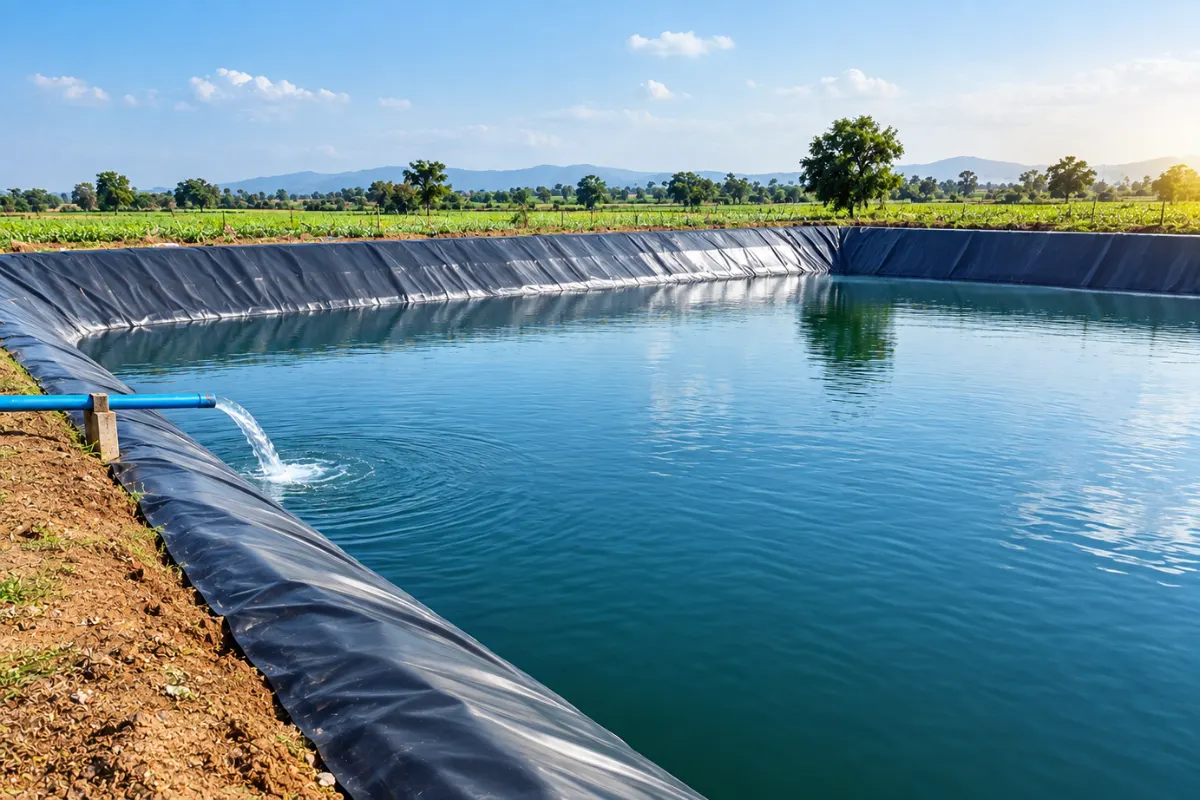
An unlined pond loses water every single day, even when it looks full. The soil absorbs it slowly, and over weeks, that seepage adds up. For farms depending on stored water for irrigation, this quiet loss can mean the difference between a reliable water supply and a dry pond right when it’s needed most.
Pond liners solve this problem directly. They create a barrier between the water and the soil, so the pond holds what you put into it. This guide explains how pond liners prevent water loss, what to look for when choosing one, and how to install and maintain them properly.
What Causes Water Loss in Agricultural Storage Ponds
Before looking at liners, it helps to understand why ponds lose water in the first place. Two factors are usually responsible.
Seepage. Water naturally moves through soil, especially sandy or loosely packed ground. So, an unlined pond can lose a significant amount of water over time, regardless of rainfall.
Evaporation. Sun and wind pull water from the surface, particularly during hot months. While this affects all ponds, seepage tends to cause the larger long-term loss in unlined storage.
Because both factors work together, farms relying on unlined ponds often see water levels drop faster than expected, even without heavy usage.
How Pond Liners Prevent Water Loss
A pond liner works by sealing the base and sides of the pond with a waterproof membrane. This stops water from soaking into the soil beneath it.
Here’s what that means in practice:
- Water stays in the pond instead of seeping into surrounding ground
- Stored water remains available for irrigation exactly when it’s needed
- Farms can plan water usage more accurately, since levels drop only from evaporation and use
- Ponds hold their volume for longer periods between refills
As a result, a well-installed liner turns an unpredictable water source into a dependable one.
Types of Pond Liner Material Used for Agricultural Ponds
Not all pond liners perform the same way, so it’s worth understanding the common options.
PVC pond liner. This is widely used for agricultural water storage because it combines flexibility with strong waterproofing. It also handles UV exposure reasonably well when properly formulated, which matters for ponds left uncovered.
PVC pond liner sheet, heavier gauge. For larger ponds or ponds exposed to more foot traffic and debris, a thicker sheet resists punctures better than a lighter one.
Custom-sized liners. Since pond shapes and sizes vary widely across farms, liners are often supplied as custom-fabricated sheets rather than standard sizes.
Where Pond Liners Are Used in Farm Water Management
Pond liners show up across several parts of agricultural water management, not just irrigation ponds. Common uses include:
- Irrigation storage ponds, holding water for dry-season crop watering
- Farm ponds used for livestock water supply
- Rainwater harvesting ponds, capturing seasonal rainfall for later use
- Aquaculture and fish farming ponds, where water retention is equally important
In each case, the goal stays consistent: keep water where it’s stored, instead of losing it to the ground beneath.
What to Look for When Choosing a Pond Liner
A few factors determine how well a liner performs over its working life.
- Thickness (gauge). Thicker liners resist punctures better, especially in ponds with rocky or uneven bases.
- UV resistance. Ponds are often left uncovered, so the liner needs to withstand continuous sun exposure without degrading.
- Puncture and tear resistance. Roots, sharp stones, and general handling during installation can damage a liner that isn’t built for it.
- Seam strength. Larger ponds usually need multiple sheets joined together, so seam quality often determines the liner’s lifespan.
- Size accuracy. A liner cut too small leaves gaps at the edges, while one that’s excessively oversized becomes harder to install and secure.
Since every pond differs in size and ground condition, it’s usually worth discussing exact measurements with the manufacturer before ordering.
Installation and Maintenance Tips
Getting the installation right matters as much as the material itself.
- Clear the pond base first. Remove sharp stones, roots, and debris before laying the liner, since these can puncture it over time.
- Smooth the ground surface. A level, compacted base reduces stress points that could wear through the liner faster.
- Allow slack at the edges. Liners naturally settle after installation, so leaving some slack prevents unnecessary tension.
- Secure the edges properly. Anchor trenches or weighted edges keep the liner in place during wind and water movement.
- Inspect periodically. Check for punctures, UV wear, or shifting at the edges every few months, especially after heavy rain.
Following these steps helps the liner perform closer to its full potential, rather than failing early due to avoidable issues.
Common Mistakes When Installing Pond Liners
A few recurring mistakes shorten a pond liner’s working life:
- Skipping ground preparation. Sharp debris left underneath is one of the most common causes of early punctures.
- Choosing a liner that’s too thin. Lower-gauge liners may seem cost-effective at first, but they wear out faster under rough conditions.
- Ignoring seam quality. Weak seams often fail before the liner material itself does.
- Leaving no slack during installation. A liner stretched too tight can tear as the ground shifts slightly over time.
- Forgetting regular inspection. Small punctures grow larger under continued water pressure if left unchecked.
Why Choose Centennial Fabrics
Centennial Fabrics has manufactured coated technical textiles for over two decades. Production runs on German coating technology, which keeps material thickness and quality consistent across every batch. This consistency matters directly for pond liners, since uneven material leads to weak points that fail first.
Here’s what that looks like for farm buyers:
- A manufacturing capability that supports custom sizing for ponds of different shapes and dimensions
- A quality control process applied to every batch, so large liner orders remain consistent throughout
- Coated fabric expertise that extends beyond pond liners into related outdoor applications like tarpaulin and custom coated fabric solutions
For farms investing in a storage pond, working with a manufacturer that understands both material performance and sizing accuracy tends to reduce costly reinstallation later.
Final Takeaway
Pond liners solve a problem that’s easy to overlook until water levels start dropping unexpectedly. By sealing the pond base, they stop seepage and keep stored water available for irrigation and farm use. Choose the right thickness, prepare the ground properly, and inspect the liner regularly. Do this, and the pond holds water reliably for years rather than losing it quietly to the soil below.