

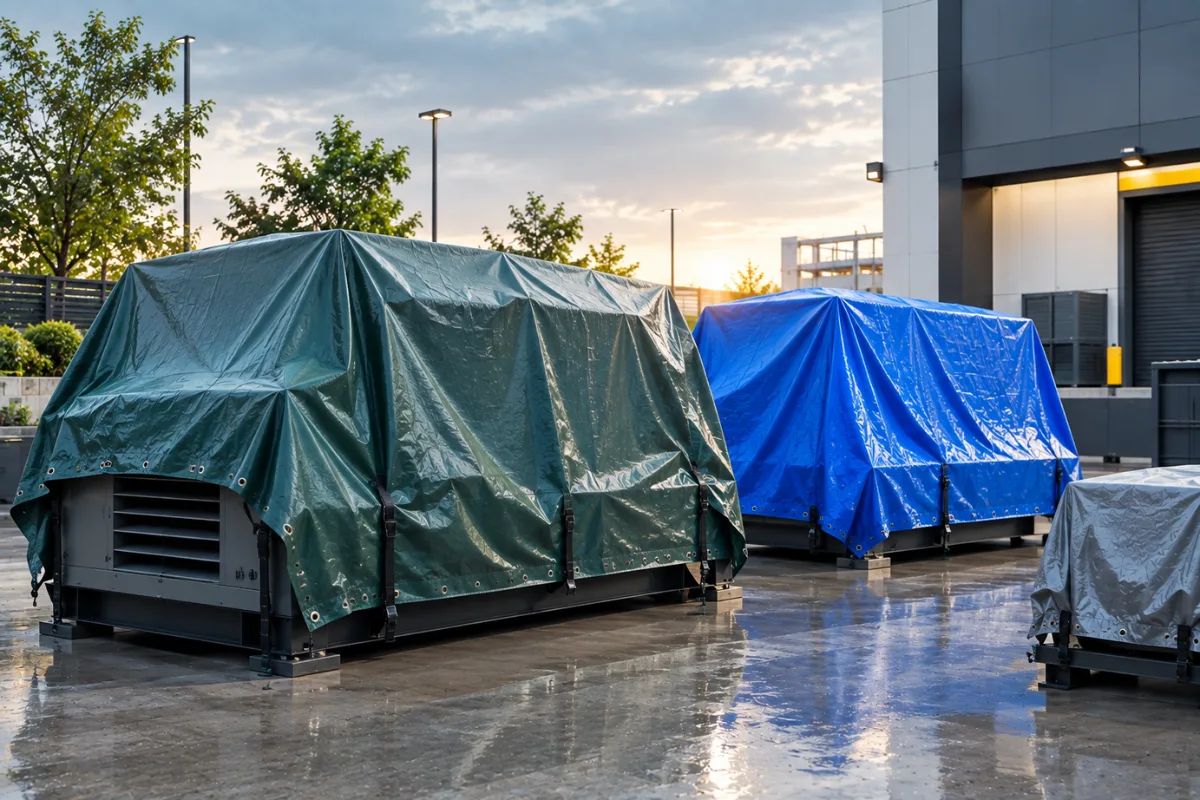
Machinery left out overnight rusts faster than most people expect. So does equipment parked between shifts, or stacked near an open yard. Rain gets into moving parts. Dust settles on control panels. Over time, this adds up to repair costs that a simple cover could have prevented.
That’s exactly where tarpaulin comes in. It’s one of the simplest ways to protect machinery and equipment, but only if you use the right type and use it correctly. This guide walks through how tarpaulin actually protects equipment, which type to pick, and how to use it the right way on site.
What Tarpaulin Actually Protects Machinery From
Tarpaulin acts as a barrier between your equipment and the outdoor environment. It doesn’t just block rain. It also shields machinery from several other risks.
Here’s what a good equipment protection tarpaulin guards against:
- Rain and moisture, which cause rust and electrical damage
- Dust and debris, which clog moving parts and vents
- UV exposure, which fades and weakens plastic and rubber components
- Wind-blown grit, which scratches painted and metal surfaces
Because of this, tarpaulin is used across construction sites, warehouses, and outdoor storage yards. It’s a low-cost solution, but the protection it offers is significant.
Types of Tarpaulin Used for Machinery and Equipment Covers
Not every tarpaulin suits every machine. So it helps to understand the main types before choosing one.
One side coated fabric. This works well for lighter equipment or shorter-term coverage, since only one face needs weather resistance. It’s also lighter to handle, which matters if you’re covering and uncovering machinery daily.
Both side PVC coated fabric. This suits equipment left outdoors for extended periods, because both surfaces face moisture and dust exposure. It’s a better fit for machinery stored near the ground or stacked equipment covers.
Heavy duty tarpaulin. For larger machinery or long-term outdoor storage, a higher GSM sheet resists tearing and handles repeated tying better than standard tarpaulin.
How to Use Tarpaulin for Machinery Protection
Using tarpaulin correctly makes a real difference to how well it performs. Here’s a simple process to follow:
- Clean the equipment first. Wipe off dust, oil, or debris before covering. Otherwise, moisture can get trapped underneath and cause damage over time.
- Choose the right size. The tarpaulin should fully cover the machinery with enough overhang on all sides. If it’s too tight, water can pool on top instead of running off.
- Secure it properly. Use ropes or bungee cords through the eyelets, and tie down every corner. This prevents wind from lifting the cover and exposing the equipment.
- Check for ground contact. If the tarpaulin touches the ground, moisture can wick upward. Raising the edges slightly, where possible, helps with airflow and drainage.
- Inspect regularly. Check the cover every few weeks for tears, loose ties, or pooling water. Small issues are easier to fix before they become bigger problems.
- Store it dry when not in use. Folding and storing tarpaulin while damp leads to mildew, which weakens the fabric over time.
Following these steps helps the tarpaulin do its job properly, rather than just sitting there as a formality.
Where Machinery Tarpaulin Covers Are Used
Tarpaulin shows up across several industries, not just construction. Common examples include:
- Construction sites, where excavators, generators, and tools sit idle overnight
- Warehouses, where equipment near loading docks faces weather exposure
- Agricultural operations, where tractors and machinery are stored outdoors between seasons
- Manufacturing yards, where raw material and finished equipment wait for transport
In each case, the goal stays the same: keep moisture, dust, and sun exposure away from equipment that would otherwise degrade faster.
What to Look for When Choosing Equipment Protection Tarpaulin
A few factors make the difference between a tarpaulin that works and one that fails within weeks.
- GSM (fabric weight). Heavier fabric holds up better for large or long-term equipment covers, though it’s also harder to handle daily.
- Coating type. One side or both side, depending on how much of the surface faces exposure.
- Eyelet spacing. Wider covers need more tie points, spaced evenly, so wind doesn’t lift one section.
- UV resistance. Equipment covered for months at a time needs a tarpaulin rated for extended sun exposure.
- Size accuracy. A cover that’s too small leaves gaps, while one that’s oversized is harder to secure properly.
Because equipment varies so much in size and shape, it often helps to discuss your specific machinery with the manufacturer before ordering.
Common Mistakes When Covering Machinery with Tarpaulin
Even a good tarpaulin fails if it’s used the wrong way. Watch out for these common issues:
- Skipping the cleaning step. Trapped dirt and moisture under the cover cause more harm than leaving equipment uncovered.
- Using a cover that’s too small. This leaves parts of the equipment exposed and defeats the purpose of covering it at all.
- Ignoring eyelet quality. If the eyelets tear loose in wind, the cover stops protecting anything.
- Leaving the tarpaulin on the ground. This traps moisture against the equipment instead of keeping it away.
- Forgetting regular inspection. Small tears grow quickly under repeated wind and rain exposure.
Why Choose Centennial Fabrics (Centfab)
Centennial Fabrics has manufactured coated technical textiles for over two decades. Production runs on German coating technology, which keeps coating thickness consistent across every batch. This matters directly for equipment covers, since uneven coating leads to weak spots that fail first.
Here’s what that means for buyers:
- A manufacturing capability covering both standard and custom GSM, coating, and reinforcement requirements
- A quality control process applied to every batch, so large equipment-cover orders stay consistent
- A tarpaulin range that can be matched to your machinery size and storage conditions, rather than sold as one generic sheet
For businesses covering multiple machines across a site, this kind of consistency reduces the number of covers that need early replacement.
Final Takeaway
Tarpaulin remains one of the simplest ways to protect machinery from rain, dust, and sun damage. However, the results depend on choosing the right type and using it correctly. Clean the equipment first, size the cover properly, secure every tie point, and inspect it regularly. Do this, and your equipment stays protected for far longer than it would sitting exposed.