

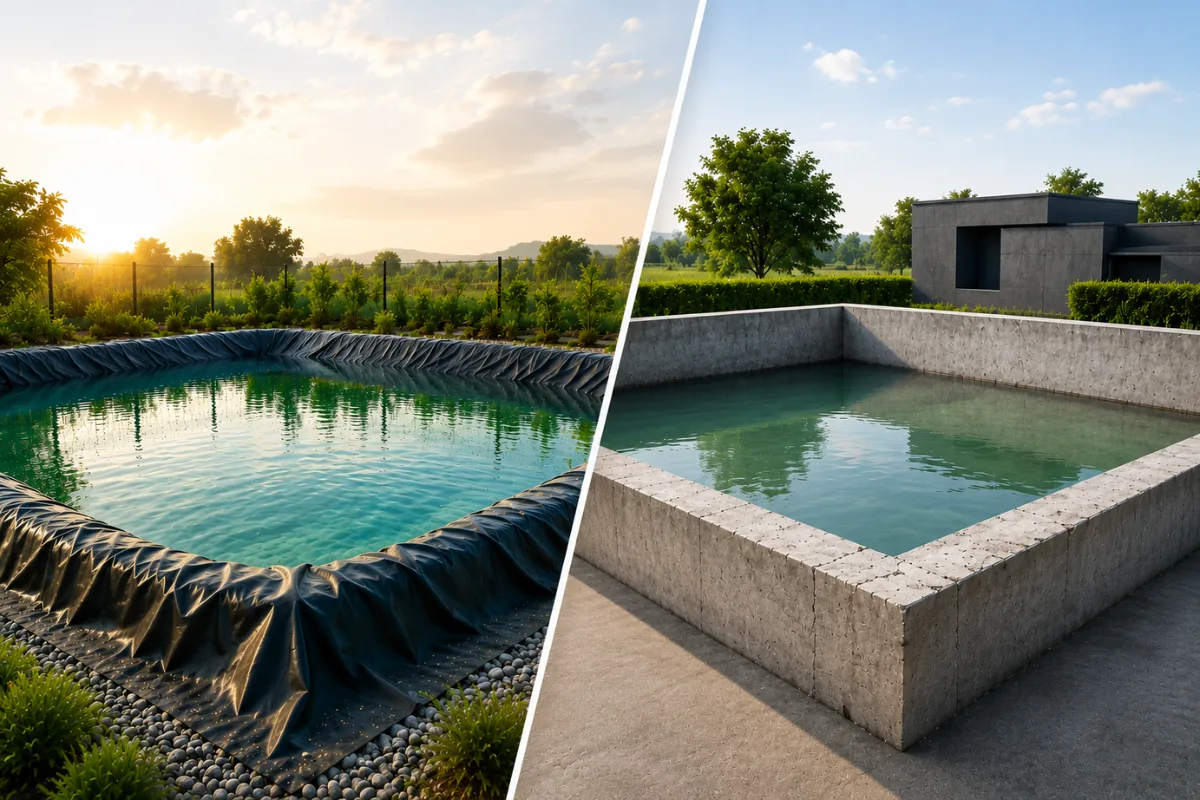
Choosing the right pond construction method is an important decision for businesses involved in aquaculture, agriculture, water conservation, and industrial water storage. While Concrete Ponds have been used for decades, modern Pond Liners have become the preferred solution due to their flexibility, lower installation costs, and long-term performance.
Whether you’re building a Fish Pond Liner system for aquaculture or a Water Pond Liner for irrigation, understanding the differences between a Pond Liner vs Concrete Pond helps maximize your return on investment (ROI). Although both options can store water effectively, they differ significantly in installation time, maintenance, durability, and lifecycle costs.
In this guide, we’ll compare Pond Liners vs Concrete Ponds to help you determine which solution is best for your project.
What Are Pond Liners?
A Pond Liner is a waterproof membrane installed inside an excavated pond to prevent water seepage into the ground. Available in materials such as PVC Pond Liner and HDPE Pond Liner, these liners provide an efficient and durable solution for water storage.
Modern Pond Liner Sheets are engineered to withstand UV exposure, weather changes, and continuous water contact, making them suitable for long-term outdoor use.
What Is a Concrete Pond?
A Concrete Pond is constructed using reinforced concrete walls and flooring to create a permanent water storage structure. While concrete offers structural strength, it often requires significant civil work, longer construction time, and higher investment.
Concrete ponds are commonly used for permanent installations but can develop cracks over time due to soil movement, temperature changes, or ground settlement, resulting in expensive repairs.
Pond Liners vs Concrete Ponds
| Feature | Pond Liners | Concrete Pond |
| Initial Cost | Lower | Higher |
| Installation Time | Fast | Slow |
| Waterproofing | Excellent | Good |
| Flexibility | High | Low |
| Maintenance | Low | Moderate to High |
| Crack Resistance | Excellent | Can Crack |
| Repair | Easy | Expensive |
| ROI | Higher | Moderate |
| Lifespan | Long | Long (with maintenance) |
For most applications, Pond Liners vs Concrete Ponds clearly demonstrates that liners offer better cost efficiency and operational flexibility.
Why Pond Liners Deliver Better ROI
Lower Installation Costs
Installing a Pond Liner Sheet requires less labor, equipment, and construction time compared to building a concrete pond. This significantly reduces initial investment.
Faster Project Completion
Unlike concrete structures that require excavation, reinforcement, curing, and finishing, pond liners can often be installed within a much shorter timeframe.
Reduced Water Loss
High-quality PVC Pond Liner and HDPE Pond Liner systems minimize seepage, helping conserve water and improve operational efficiency.
Lower Maintenance
Concrete ponds may require repairs due to cracking or surface deterioration. Pond liners generally require less maintenance and can be repaired quickly if damaged.
Long-Term Cost Savings
Because of reduced maintenance, faster installation, and lower repair costs, pond liners often provide a better long-term return on investment.
Applications of Pond Liners
Modern Pond Liners are widely used across multiple industries.
Aquaculture
An Aquaculture Pond Liner provides a clean and controlled environment for fish farming while minimizing water loss and improving pond management.
Fish Farming
A Fish Farming Pond Liner supports efficient water retention and helps create stable conditions for fish growth, making it a preferred choice for commercial aquaculture operations.
Agriculture
Farmers use Water Pond Liners for irrigation reservoirs, rainwater harvesting, and water conservation systems.
Industrial Water Storage
Industries rely on pond liners for wastewater management, process water storage, and emergency water reserves.
Landscaping
Decorative ponds and water features also benefit from durable pond liner systems that reduce leakage and simplify maintenance.
How to Choose the Best Pond Liner for Fish Farming
Selecting the Best Pond Liner for Fish Farming depends on several factors.
Consider:
- Pond size
- Water depth
- Soil conditions
- UV exposure
- Expected lifespan
- Installation requirements
- Budget
- Maintenance expectations
Working with experienced Pond Liner Manufacturers helps ensure the right material is selected for long-term performance.
Why Work with Pond Liner Manufacturers in India?
Experienced Pond Liner Manufacturers in India understand local climate conditions, agricultural requirements, and industrial applications.
Choosing an established manufacturer provides:
- Consistent product quality
- Reliable technical support
- Customized liner solutions
- Quality-tested materials
- Long-term product performance
Why Choose Centfab?
Centfab manufactures high-quality Pond Liners designed for agriculture, aquaculture, industrial water storage, and infrastructure projects.
Our solutions offer:
- Premium waterproof performance
- Durable PVC-coated materials
- Custom sizes and specifications
- Advanced manufacturing technology
- Strict quality control
- Reliable technical support
- Long-lasting performance
Whether you need a Fish Pond Liner, Water Pond Liner, or customized liner solution, Centfab provides products engineered to meet demanding operational requirements.
Conclusion
When comparing Pond Liners vs Concrete Ponds, pond liners consistently provide better value for most agricultural, aquaculture, and industrial projects. Their lower installation costs, superior waterproofing, easier maintenance, and faster deployment make them an excellent long-term investment.
Whether you’re installing a PVC Pond Liner, HDPE Pond Liner, or a Fish Farming Pond Liner, choosing the right solution can significantly improve operational efficiency while reducing maintenance costs. Partnering with experienced Pond Liner Manufacturers like Centfab ensures you receive reliable products designed for long-lasting performance.