

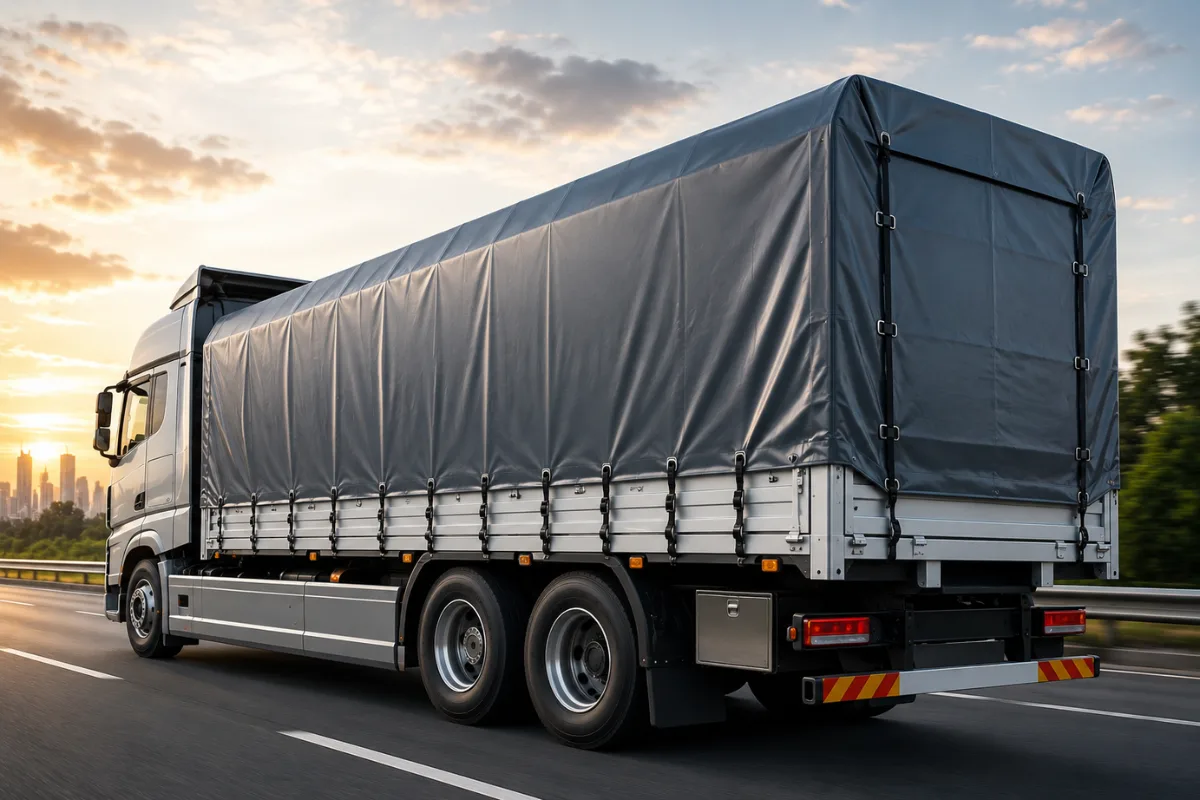
Nothing derails a delivery schedule like a truck cover that gives up halfway through the route. Rain gets in, dust settles on the load, and somewhere on the highway a corner of the tarp starts flapping loose. For fleet owners and transport contractors, the fabric behind that cover is a decision that seems small until it isn’t.
PVC coated fabric has become the go-to material for truck covers across construction, agriculture, and general freight mainly because it holds up to conditions that plain canvas simply can’t. This guide breaks down why it works, what actually matters when you’re choosing it, and where things tend to go wrong.
What Is PVC Coated Fabric for Truck Covers?
Put simply, it’s a base textile, usually polyester or nylon coated with a layer of PVC (polyvinyl chloride) on one or both sides. The coating does the waterproofing. The base fabric does the heavy lifting when it comes to strength.
Together, they’re built to handle:
- Wind load while the truck is moving
- Constant tension from ropes and straps
- Friction from loading and unloading
- Repeated folding without cracking
This combination is exactly why PVC coated fabric shows up across truck tarpaulins, trailer covers, and body covers and why plain canvas, which soaks up moisture and wears out faster outdoors, has largely fallen out of use for this job.
Why PVC Coated Fabric Works for Truck Cover Applications
Truck covers deal with a lot: vibration, hours of sun, sudden downpours, dust, and being folded and unfolded at every stop. A few properties make PVC coated fabric hold up to that.
- Water resistance The PVC layer keeps water from soaking into the base fabric, which matters when cargo can’t get wet: cement, electronics, packaged food, agricultural produce.
- UV stability Ordinary fabric turns brittle under constant sun. PVC coated fabric formulated with UV stabilizers holds up better over repeated exposure, though this depends on the specific formulation, so it’s worth confirming with the manufacturer.
- Tear and abrasion resistance Dragging, folding, and contact with sharp cargo edges are routine. A fabric with the right denier and coating weight resists tearing better than lighter alternatives.
- Flexibility across climates Depending on the coating formulation, the fabric can stay workable in both hot and cool conditions, which matters for covers folded daily across different routes and seasons.
How Truck Cover Fabric Is Used in Real Transport Operations
In everyday fleet operations, the fabric does more than sit over the cargo. It gets tied down, pulled tight over uneven loads, and rolled up and stored between trips. A tarpaulin made from PVC coated fabric typically shows up in:
- Open-body trucks carrying construction material, where it takes on dust, cement residue, and repeated tying
- Agricultural transport, protecting produce from rain and sun without trapping excess moisture underneath
- General freight fleets, where the same cover gets reused across hundreds of trips
- Long-haul routes, where it’s exposed to different weather within a single journey
One side or both sides? It depends on the job.
- One side coated fabric tends to be lighter and more cost-effective for lower-exposure use.
- Both side PVC coated fabric protects both faces useful when the underside also touches moisture, like during ground contact in storage.
What to Consider When Selecting Truck Cover Fabric
“PVC coated” isn’t a single answer it’s a starting point. Here’s what actually affects how the cover performs:
- Fabric weight (GSM) Heavier fabric holds up better under rough handling but adds weight and is harder to fold and store.
- Coating type Single side or both side, depending on exposure on both faces of the cover, not just the top.
- Base fabric strength The polyester or nylon weave underneath determines tear resistance on its own. A good coating over a weak base still fails under tension.
- Seam and eyelet construction Even great fabric underperforms with poor stitching or eyelet placement. Ask how seams are joined and whether stress points like corners and tie-down holes are reinforced.
- Climate of operation High heat, coastal salt exposure, or cold-weather swings should shape which coating formulation you ask for.
- Frequency of use A cover used daily on long routes has different durability needs than one used occasionally for short local runs.
Handling, Stacking, and Maintenance Considerations
The material only does half the job how it’s handled does the rest.
- Rolling covers tightly and storing them damp invites mildew and weakens seams over time, even with a water-resistant coating.
- Folding along the same crease repeatedly stresses the coating at that line faster than general wear elsewhere.
- A simple rotation and inspection routine checking eyelets, seams, and coating condition every few months catches wear before it turns into a mid-route failure.
Common Mistakes Businesses Make When Choosing Truck Cover Fabric
A few patterns show up again and again:
- Buying on price per meter alone. A cheaper fabric replaced every season can end up costing more over a year than one that lasts several.
- Ignoring the base fabric strength. The coating gets all the attention, but the weave underneath is what actually resists tearing.
- Using one fabric for every route. Dusty open routes and rain-heavy routes have different demands; a generic fabric for both usually wears unevenly.
- Skipping the sample check. Requesting a swatch before a bulk order to test flexibility, seams, and coating feel saves a costly reorder later.
Where This Fits with Centennial Fabrics’ Product Range
Truck cover fabric isn’t made in isolation. The same coating know-how goes into pond liners, awnings, and industrial covers, because the core requirements overlap: water resistance, UV exposure, and outdoor durability. If your business has related needs, it’s worth looking at awning fabrics for depot shelters or custom coated fabric solutions built around a specific application.
Why Choose Centennial Fabrics (Centfab)
Centennial Fabrics has been manufacturing coated technical textiles for over two decades. Production runs on German coating systems, which help keep coating thickness consistent from batch to batch and inconsistent coating is one of the more common reasons truck cover fabric fails early.
What that looks like in practice:
- Manufacturing capability covering standard options like one side coated fabric and both side coated variants, plus custom coating for specific requirements
- A quality control process on every batch before dispatch, which matters for operators ordering fabric in volume
- A team that can talk through GSM, coating type, and climate suitability directly, rather than pointing you to one generic product
That kind of conversation upfront tends to matter more than it seems; it’s usually the difference between a cover that lasts and one that needs replacing after a season.
Final Takeaway
PVC coated fabric earns its place on truck covers by balancing water resistance, UV stability, and tear strength for daily transport use. The right pick isn’t about finding “the best” fabric in the abstract, it’s about matching weight, coating type, and base strength to your actual routes, climate, and cargo. Check the base fabric, ask about coating consistency, and look closely at the construction before you order, and the cover will hold up a lot longer than one chosen on price alone.
