

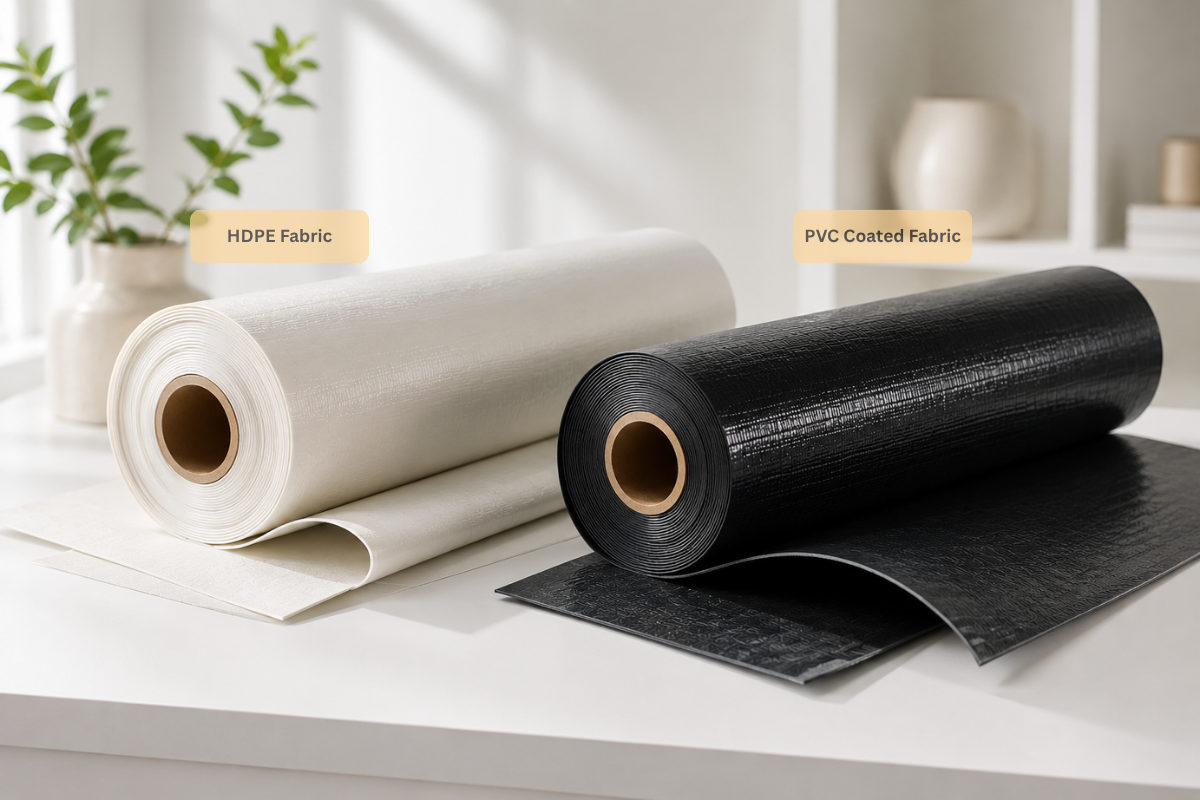
Choosing the right material is essential for the success of any industrial, agricultural, or commercial project. Whether you are manufacturing truck covers, pond liners, water storage tanks, tarpaulins, temporary shelters, or protective enclosures, selecting the appropriate fabric directly affects durability, performance, maintenance, and long-term operating costs.
Among the most commonly used Technical Textile Fabric solutions are PVC Coated Fabric and HDPE Fabric. Both materials offer excellent performance but are engineered for different applications. While PVC Coated Fabrics are preferred for waterproof, heavy-duty, and long-term outdoor applications, HDPE Fabrics are widely used where lightweight construction, ventilation, and cost-effectiveness are the priority.
Understanding the Difference Between PVC and HDPE Fabrics allows businesses to choose the right material based on operational requirements instead of simply comparing prices. This guide explains the characteristics, applications, advantages, and limitations of both materials to help you make an informed purchasing decision.
What is PVC Coated Fabric?
PVC Coated Fabric is a woven polyester fabric coated with Polyvinyl Chloride (PVC) to enhance its mechanical strength and environmental resistance. The coating creates a durable protective layer that offers waterproof performance, abrasion resistance, flexibility, and UV protection.
Modern Industrial PVC Coated Fabric is widely used across transportation, infrastructure, agriculture, manufacturing, aquaculture, and construction industries because it performs reliably under demanding environmental conditions.
Depending on the application, manufacturers also produce Heavy Duty PVC Coated Fabric with increased tensile strength for projects requiring higher load-bearing capacity and longer operational life.
What is HDPE Fabric?
HDPE Fabric is manufactured using woven High-Density Polyethylene tapes. Unlike PVC-coated materials, HDPE fabrics are breathable and lightweight while still providing excellent tensile strength.
Because of these characteristics, HDPE Fabrics are commonly selected for applications where airflow is necessary instead of complete waterproofing.
Popular HDPE Fabric Applications include:
- Agricultural shade nets
- Greenhouses
- Construction safety nets
- Fencing
- Nursery covers
- Scaffold protection
- Windbreak systems
- Shade structures
Difference Between PVC and HDPE Fabrics
Although both materials belong to the technical textile industry, they serve different purposes.
| Feature | PVC Coated Fabric | HDPE Fabric |
| Waterproof | Excellent | Limited |
| UV Resistance | Excellent | Good |
| Flexibility | High | Moderate |
| Abrasion Resistance | Excellent | Moderate |
| Chemical Resistance | High | Moderate |
| Breathability | No | Yes |
| Strength | Very High | High |
| Weight | Heavy | Lightweight |
| Maintenance | Easy | Low |
| Service Life | Longer | Moderate |
The primary difference between PVC and HDPE Fabrics lies in waterproof performance and durability. PVC-coated materials provide a sealed protective surface suitable for harsh environments, while HDPE fabrics prioritize ventilation and lightweight performance.
PVC Coated Fabric Applications
One of the biggest advantages of PVC Coated Fabrics is their versatility across industries.
Transportation
PVC coated materials are widely used for truck curtains, trailer covers, cargo covers, and transport enclosures where moisture protection is essential.
Agriculture
Farmers use PVC coated fabrics for pond liners, water storage tanks, irrigation systems, fish farming tanks, livestock shelters, and agricultural covers.
Construction
Construction companies rely on waterproof PVC fabrics for temporary roofing, scaffolding protection, equipment covers, weather barriers, and site enclosures.
Industrial Manufacturing
Industrial PVC Coated Fabric is commonly used for machine covers, industrial curtains, warehouse partitions, protective barriers, and flexible enclosures.
Outdoor Structures
PVC coated materials are extensively used in awnings, canopies, tensile structures, event tents, and outdoor shelters because of their long-lasting weather resistance.
HDPE Fabric Applications
Although HDPE cannot completely replace PVC-coated materials, it performs exceptionally well in applications requiring airflow.
Common HDPE Fabric Applications include:
- Shade nets
- Agricultural covers
- Greenhouses
- Nursery protection
- Construction safety nets
- Wind barriers
- Temporary fencing
- Landscape protection
Its lightweight nature also makes installation easier for large-area coverage.
PVC Coated Fabric vs HDPE Fabric: Which Should You Choose?
Choosing between PVC Coated Fabric vs HDPE Fabric depends entirely on the project’s operating environment.
Choose PVC Coated Fabric if you need:
- Complete waterproofing
- High tensile strength
- Long outdoor life
- UV resistance
- Heavy-duty industrial performance
- Easy cleaning
- Chemical resistance
Choose HDPE Fabric if you need:
- Breathability
- Lightweight installation
- Shade applications
- Air circulation
- Cost-effective coverage
- Temporary structures
PVC Coated Fabric Buying Guide
A proper PVC Coated Fabric Buying Guide starts with understanding the application rather than focusing only on price.
Before selecting a fabric, consider:
Waterproof Requirements
For projects exposed to continuous rain or moisture, Waterproof PVC Coated Fabric provides superior protection.
Fabric Strength
Choose Heavy Duty PVC Coated Fabric for transportation, industrial covers, and infrastructure applications requiring higher tensile strength.
Environmental Exposure
Projects exposed to UV radiation, chemicals, or harsh weather require premium-grade industrial PVC-coated fabrics.
Flexibility
Applications involving folding, rolling, or frequent movement require fabrics with excellent flexibility and crack resistance.
Expected Service Life
Long-term installations should prioritize durability and weather resistance over initial purchase cost.
Best Fabric for Industrial Applications
When evaluating the Best Fabric for Industrial Applications, PVC-coated materials generally outperform HDPE in demanding environments.
Industrial buyers prefer PVC-coated fabrics because they offer:
- Better waterproofing
- Higher abrasion resistance
- Superior weather resistance
- Longer service life
- Improved structural stability
- Easier maintenance
HDPE remains an excellent solution where ventilation is more important than waterproof protection.
Why Choose Centfab?
Centennial Fabrics Limited has established itself as a trusted manufacturer of high-performance technical textile solutions for industrial and commercial applications.
Businesses choose Centfab because of:
- Advanced coating technology
- Consistent product quality
- Customized fabric solutions
- Industry-specific expertise
- Reliable manufacturing capabilities
- Strict quality control
- Customer-focused technical support
- Solutions designed for demanding environments
Whether your requirement involves transportation, agriculture, aquaculture, infrastructure, industrial manufacturing, or outdoor structures, Centfab provides durable fabric solutions tailored to project requirements.
Conclusion
Both PVC Coated Fabric and HDPE Fabric have unique advantages, making each suitable for different applications.
If your project requires waterproofing, durability, flexibility, and long-term outdoor performance, PVC Coated Fabrics are the preferred choice. For applications requiring airflow, lightweight construction, and economical coverage, HDPE Fabrics remain an effective alternative. By understanding the Difference Between PVC and HDPE Fabrics, evaluating your project requirements, and following a structured PVC Coated Fabric Buying Guide, you can select the material that delivers the best value, performance, and reliability over its service life.